The quickest way to spoil a museum day in Vienna is to try to do too much of it. Three grand collections, two coffee stops, and one heroic crossing of the Ringstraße may sound efficient on paper; in practice, it turns the afternoon into a small administrative error.
I prefer a slower arrangement. One museum with rooms worth lingering in, one café where the tablecloth looks properly ironed, and one walk that gives the city a chance to re-enter the frame. Vienna is especially good at this pace: the museums are often elegant, the surroundings are civilised, and there is almost always a bench nearby if you need one.
Start with the idea that less is more
Vienna rewards restraint. The city’s museum landscape is rich enough that you do not need to conquer it; you only need to choose carefully. A single afternoon can comfortably hold one major collection and one smaller one, but not if you want to remember either of them properly.
The best rhythm is simple: arrive after lunch, begin with a collection that suits your mood, then leave time for coffee before your attention frays. That might sound leisurely, but it is exactly how Vienna wants to be handled. The city is happiest when you stop treating culture like a checklist.
If the weather turns grey, which it often does just when you have plans, this is even easier. For a gentler itinerary built around cafés as much as galleries, I also like the logic of the café scene in Vienna. Museum-going and pastry are not rivals here; they are close collaborators.
The MuseumsQuartier: one stop, several moods
The MuseumsQuartier is the simplest place to begin if you want variety without logistical gymnastics. The Leopold Museum, mumok, and Kunsthalle Vienna sit within easy reach of one another, which means you can choose according to temperament rather than stamina. That matters more than it sounds like it should.
The Leopold Museum is where I would send anyone who wants Vienna’s Secession-era elegance without the dustier aura of a lecture hall. Klimt and Schiele are the obvious names, but the rooms also have a measured, almost domestic scale that keeps the visit from feeling exhausting. It is a museum that asks you to look, not to perform.
By contrast, mumok is where I go when I want the architecture and the art to argue a little. Its dark, blocky exterior sets the tone, and inside the contemporary works have plenty of room to breathe. If you are the type who needs a change of pace after a room of golden frames, this is a good reset.
The broader MuseumsQuartier courtyard is useful even when you are not especially interested in the surrounding institutions. There are places to sit, people to watch, and enough open space to make the whole visit feel like a proper afternoon rather than a sealed cultural encounter. It also keeps the transition to coffee or a late lunch pleasantly easy.
Belvedere: for paintings and a measured walk
The Belvedere is one of Vienna’s most satisfying museum settings because it gives you both the collection and the setting without forcing you to choose. The Upper Belvedere, with its formal gardens and pale façades, is a handsome place to arrive at a slower pace. It feels less like a sudden immersion and more like an elegant appointment.
Inside, the headline is Gustav Klimt’s The Kiss, of course, but the stronger reason to go is that the museum balances one essential crowd-pleaser with a wider collection that rewards attention. The rooms are clear, calm, and pitched at a scale that makes lingering feel natural rather than indulgent.
I also like how neatly the visit connects to the surrounding city. You can leave the museum and cut across the gardens, then continue toward the Landstraße area or simply stop for coffee before deciding what else the day should become. That flexibility is part of the pleasure. A museum shouldn’t trap you; it should improve your route.
The Kunsthistorisches Museum: the grand afternoon done properly
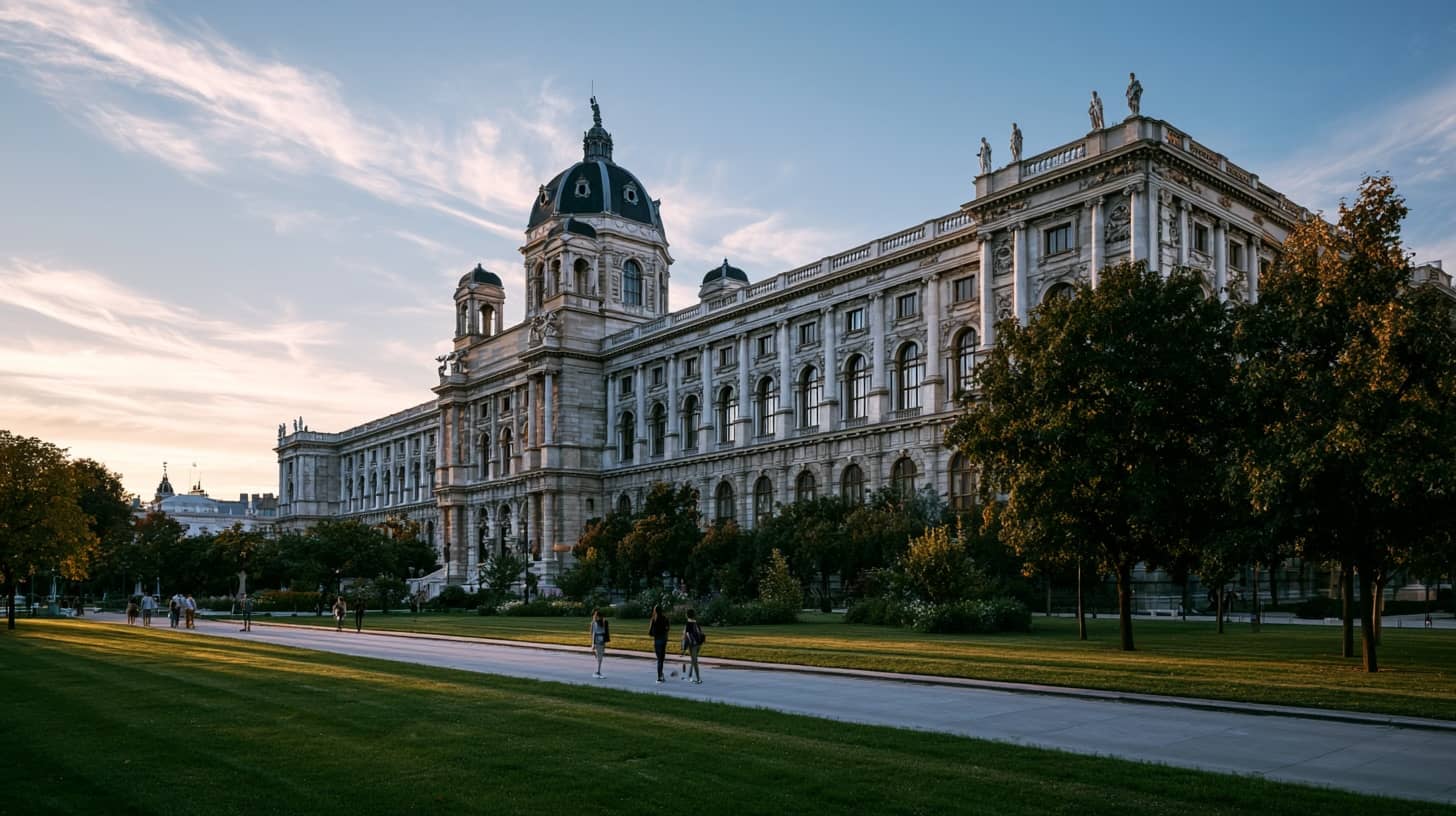
If you only choose one monumental museum in Vienna, make it the Kunsthistorisches Museum. The building alone is reason enough: marble, staircases, ceilings that seem to have been drafted by someone with an excellent budget and a great deal of patience. It is the kind of place that makes even a short visit feel ceremonial in the best way.

The collection is broad, but the joy lies in moving through it at a humane speed. I would not try to “cover” it. I would find the paintings, ancient objects, and rooms that actually hold my attention, then accept that the rest can wait for another visit. That is the secret to enjoying a museum of this scale without turning into a stranger to your own afternoon.
The café inside is especially useful because it turns the museum into a pause rather than a project. A coffee or small sweet here feels entirely appropriate, and the building itself does half the work of making you slow down. If you like your cultural afternoons with a slightly formal edge, this is where Vienna excels.

Across the square, the Naturhistorisches Museum offers another possibility if you prefer mineral collections, fossils, and a more scientific kind of grandeur. The two buildings face each other like siblings with excellent manners. Pick one if you want depth; attempt both only if your idea of pleasure includes a considerable amount of standing.
Albertina: when prints, drawings, and the city meet
The Albertina is ideal for travellers who like their museums slightly quieter in tone. Its drawings, prints, and changing exhibitions reward a slower eye, and the building’s location near the centre means you can weave it into a wider walk without much effort. It is one of the best places in Vienna to remember that not all museum visits need to be monumental.
I especially like the way the Albertina lets you move between intimate rooms and views back toward the city. You step out and suddenly you are close to the State Opera, the Ringstraße, and a set of streets that make the whole afternoon feel coherent rather than stitched together. That sense of continuity matters when you are travelling on foot.
If your energy is moderate rather than heroic, this is a particularly good choice. You can spend a focused hour or two here, then leave without feeling as though you have abandoned the mission. The museum respects your time, which is increasingly rare and frankly rather charming.
Where I would pause for coffee between galleries
In Vienna, museum afternoons improve dramatically once coffee is built into the plan. I do not mean a token espresso gulped beside the cloakroom. I mean an actual sitting-down, napkin-and-glass-of-water sort of pause, ideally somewhere with a little room to recover your thoughts.
Within the museum circuit, the café inside the Kunsthistorisches Museum is the most obvious and often the most satisfying. Near the Albertina and the State Opera, there are several classic options where the point is less novelty than composure. Outside the MuseumsQuartier, the surrounding streets also offer enough cafés to make a second round unnecessary, which is often the right outcome.
For a richer half-day, I would combine one museum with one proper café stop and one short architectural detour. That might mean the Belvedere followed by a café near the main station, or the Kunsthistorisches Museum followed by a slow walk toward the Hofburg. Vienna works best when you let the intervals matter.
- Carry a small amount of cash; not every café likes card-first certainty.
- Wear shoes you can stand in comfortably, not just walk in.
- Do not overbook your museum day with a late dinner you have to sprint toward.
- If rain is likely, build in an indoor backup rather than pretending the weather will improve by etiquette alone.
Neighbourhoods that make the museum day feel complete
The nicest museum afternoons in Vienna are the ones that extend into the surrounding streets. Around the MuseumsQuartier, you get a mix of institutions, open space, and easy access to the 7th district, where the city feels a touch more contemporary without becoming self-conscious about it. It is a good area for a post-museum wander because you can move from culture to cafés without changing tempo abruptly.
The Innere Stadt gives you the opposite pleasure: more formal, more historic, and more tightly composed. This is where the State Opera, the Hofburg, and several major museums sit within a fairly elegant radius. If you like a city centre that behaves like a proper stage set for civic life, this is the part to linger in after your visit.

Near the Belvedere, the walk feels a little quieter and more residential. That works in your favour if you want to end the afternoon with a calmer mood, especially after a museum that has given you a lot to look at. I often think of this stretch as a useful exhale: gardens, façades, and enough distance between stops to let the day settle.
How to choose the right museum for your mood
Not every slow afternoon needs the same kind of art. If you want Vienna at its most polished and historically assured, choose the Kunsthistorisches Museum. If you prefer a tighter, more modern art experience, the Leopold Museum does the job with less sprawl.
If architecture matters as much as the collection, the Belvedere is the obvious answer. If you want a central location that leaves room for the rest of the city, the Albertina is hard to beat. And if you like to keep your options open, the MuseumsQuartier gives you several directions without forcing a grand commitment.
This is the practical advantage of Vienna’s museum landscape. It is not only about what is inside the building, but about how the building allows you to spend the rest of the day. A good museum here should leave you with energy for a walk, a cake, or a second thought. That is a very useful standard.
Practical notes for a smoother visit
Book ahead when you can, especially for headline exhibitions. Even when I am not trying to be especially organised, I appreciate not having to queue while staring at a poster of something I already wanted to see. Museum websites are usually the best place for ticket details, timed entry information, and any temporary changes.
Public transport makes this whole plan easier than it looks. Vienna’s trams and U-Bahn lines are efficient enough that you can move between areas without turning the afternoon into a hike. For route planning, the Wiener Linien site is the official source I would trust before any improvisation.
If you are building the day around current exhibitions, it is worth checking each museum’s own site before you go: the Leopold Museum, the Kunsthistorisches Museum, and the Belvedere all publish the details you actually need. That is the cleanest way to avoid discovering that your carefully chosen afternoon is, in fact, closed for a private event or rearranged display.
Why a slow afternoon suits Vienna so well
Some cities ask you to chase them. Vienna asks you to sit still for a moment and notice how things are arranged. Its museums make that easy because they rarely feel like isolated boxes of culture; they sit inside a broader urban rhythm of cafés, tram lines, façades, gardens, and very considerate public space.
That is why I think one museum is often enough here. Once you let the visit breathe, the rest of the city starts to participate. You stop judging the afternoon by volume and start judging it by texture, which is usually a better standard anyway.
So I would not plan Vienna’s museums as a conquest. I would plan them as an elegant interruption, one that leaves room for coffee, a short walk, and the pleasure of not rushing. That is generally how the city gives back its best side.