March Is the Month to Catch Sofia Before It Competes for Your Attention
March is when I’d choose Sofia, precisely because it has not yet fully committed to spring. The streets are lighter on tour groups, the museums are easier to enter on a whim, and the city’s grand Soviet-scale spaces are still more pleasant to cross when the weather has a little edge.
You do not get the full theatrical version of the city in March. That is the point. You get a more practical Sofia: cafés with people lingering over coffee, tram rides that make sense, and a centre that can be read in a couple of concentrated days without rushing past half of it.
If you are planning a short break, this is an unusually sensible time to come. Prices can still be kinder than in the warm-season rush, and you can build a compact trip around architecture, museums, food, and the occasional long lunch. That combination suits Sofia better than any overstuffed sightseeing schedule.
What March Actually Feels Like
March in Sofia can be cold, mild, wet, windy, and occasionally all three before lunch. The light improves noticeably through the month, but the city still rewards a coat you will not resent carrying, much like the weather-proofing that helps on a late-night arrival. I would pack for a European capital that has not quite decided whether it is winter or spring.
That uncertainty changes the way the city works. You spend more time indoors than you would in May, which is a gift if you like museums, galleries, cafés, and old buildings with some story in their walls. It also means you can enjoy the city centre at a slower, more readable pace.
There is one more advantage to this in-between season: Sofia’s scale becomes clearer when the pavements are not crowded. The distances are manageable, the centre is flatter than many capitals, and the best way to understand it is still on foot, by tram, and on the occasional metro ride.
A Good First Walk Through the Centre
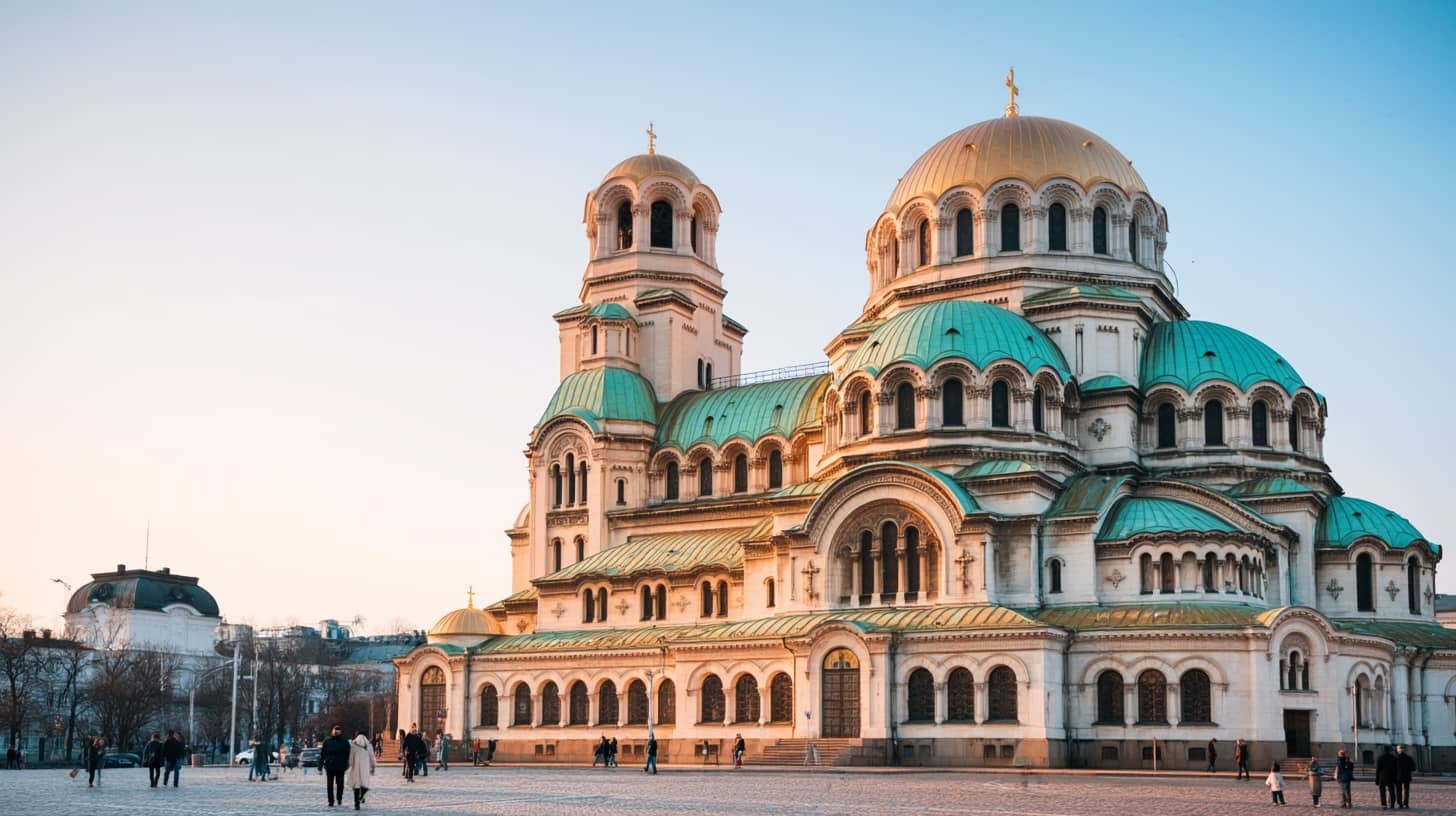
I would start at St Alexander Nevsky Cathedral, not because it is the city’s only landmark, but because it gives you a strong first frame for Sofia’s mix of imperial, religious, and modern public life. The cathedral’s gold domes are impossible to miss, and the surrounding square helps you orient yourself quickly.
From there, the walk south is the point. The Russian Church of St Nicholas, the National Art Gallery, and the former royal palace all sit within easy reach, and the architecture keeps shifting as you move. You feel the city’s different eras rather than just ticking them off.
Keep going to the Largo and the government quarter. The old ceremonial scale around the presidency and ministries is a reminder that Sofia was designed to look important, which it still does, even when the paving is slightly patchy and the traffic behaves as if it has an argument to win.
If you only have one hour of daylight left, use it here rather than trying to be ambitious. Sofia rewards concentration more than speed, and March is exactly the season when that becomes obvious.
Museums That Make Sense in Cold Weather
For a short March trip, I would plan at least one long indoor day. The National Gallery is an easy place to begin if you want a sense of Bulgarian painting, royal interiors, and the city’s more formal cultural history. It is the kind of museum that works best when you are not in a hurry to “do” anything else.
The National Museum of History is a stronger choice if you want the broader backstory, especially the sections that help explain how Bulgarian identity was shaped over centuries. It is not a small stop, so treat it as a half-day rather than a box to tick between coffees.
The National Archaeological Museum is another good March option, housed in a former mosque with a very fitting sense of accumulated time. Sofia is excellent at that kind of layered reuse: buildings change jobs, but they do not lose their atmosphere.
If contemporary art is more your speed, look at what is showing at the city’s galleries rather than assuming you need a major blockbuster. Sofia’s museum scene is strongest when you give it space, not pressure.
Neighbourhoods Worth Your Time When the Weather Is Mixed
For a short stay, I would keep my base near the centre, then branch out in manageable pieces. Oborishte is a sensible area for cafés, handsome streets, and easy access to the main sights without feeling swallowed by them. It is one of those parts of a city that quietly improves every practical decision.
Dondukov Boulevard and the streets around the National Assembly are good for reading the city’s formal side, but I also like drifting toward Shishman Street when I want something less ceremonious. It has cafés, small bars, bookshops, and the sort of foot traffic that suggests residents actually use the place.
Lozenets offers a calmer residential feel and works well if you prefer to retreat from the centre after sightseeing. It is not the first place I would recommend for a first-time visitor who wants to be in the middle of everything, but it suits travellers who like their evenings quiet and their mornings easy.
For a more creative feel, the edges around Graf Ignatiev and nearby side streets are worth a wander. Sofia’s most interesting city life often appears in these transitional blocks rather than in grand master plans.
Where I’d Pause for Coffee and a Proper Lunch
Sofia takes coffee seriously enough that a March trip can become a small study in café habits. I would not race through this part of the day. The city is better when you sit down, order something strong, and watch how locals stretch a midday break into something almost ceremonial.

For breakfast or a first coffee, the centre gives you enough options that choosing well matters more than choosing widely. Look for places that take their espresso, pastries, and seating seriously rather than trying to offer everything to everyone. The best cafés in Sofia tend to be readable within one glance: clean lines, steady service, and enough people working or reading to make the room feel in use.
Lunch is where March becomes especially useful. A bowl of soup, a salad, grilled vegetables, or a plate of Bulgarian meze is much more appealing when the temperature still has a little bite. If you want a simple, no-fuss meal, choose a place near your museum or walking route and keep the day moving at human speed.
For something more ambitious, Sofia’s newer restaurants tend to be easier to enjoy at lunch than at dinner, when reservations matter more and the room can feel too polished for a short trip. March lets you get away with spontaneity.
A Very Practical Food-and-Drink Plan
If I had only two days, I would avoid overengineering meals. Sofia is not a city that requires you to build a spreadsheet just to eat well. One traditional lunch, one café-heavy afternoon, and one evening with wine or rakia is enough to get the shape of the place.
- Try a tavern-style restaurant for Bulgarian staples rather than chasing a grand “local experience.”
- Leave room for banitsa in the morning, especially if you are moving between sights.
- Choose one leisurely coffee stop near the centre and make it a habit instead of a detour.
- If the weather turns, use that as the reason to go indoors rather than as a travel disappointment.
For drinks, Sofia is pleasantly unshowy. I would rather spend an evening in a bar with a short list of Bulgarian wines than in a place trying too hard to look international. The city knows how to keep things low-key, and March suits that mood.
How to Move Around Without Wasting Time
The centre is walkable enough that you can cover a lot without thinking about transport every ten minutes. That said, Sofia’s metro is useful, especially if you are staying a little outside the core or want to avoid weather-related stubbornness. The official public transport information is worth checking before you go, particularly if you want to understand routes rather than improvising with a paper map and optimism.
Trams are part of the city’s texture, not just a way to get from A to B. Even if you only use them once or twice, they help the city make sense as a lived-in place rather than a sightseeing set. If you like urban rhythm, they are part of the point.
I would not recommend packing your March schedule too tightly. Distances can look short on a map and still cost more energy than expected if the weather is unfriendly. Leave slack for one extra coffee or a longer museum visit, because Sofia is at its best when it is not being bossed around.
Where to Stay for a Short March Trip
For a first or second visit, I would stay close to the centre and keep the logistics boring. That usually means somewhere between the Cathedral, the National Assembly, and the main shopping streets, where you can walk to much of what matters without relying on transport after dark.
If you want a neater, more polished hotel experience, Sofia has enough boutique and design-leaning options to make that easy. I would look for a hotel with good soundproofing, a decent breakfast, and a lobby that makes waiting for a taxi feel civilized. In March, comfort matters more than views you cannot use.
For travellers who prefer character over scale, smaller hotels in older buildings can be a better fit. Just be selective about heating, lift access, and whether the room descriptions are realistic. Sofia is a city where practical details pay off quickly.
If you are staying longer than two nights, consider a location that keeps you near both the centre and one useful metro stop. That gives you enough flexibility to wander without turning every return to the hotel into a project.
A Short Itinerary That Leaves Room to Breathe
One of the city’s strengths is that you can have a proper short trip without turning it into a checklist. On day one, I would do the cathedral area, the centre, and one museum, then finish with a long coffee and an easy dinner. That gives you a clean first impression and keeps the day from collapsing into tired sightseeing.

On day two, focus on one neighbourhood, one more museum or gallery, and one meal that feels like a sit-down rather than a stopgap. If the weather improves, take an aimless walk through the squares and boulevards. If it does not, Sofia still works indoors.
On a third day, if you have it, add a slower piece: a late breakfast, one final museum, and time for the kind of wandering that happens when you no longer feel pressure to “cover” anything. That is often when the city becomes most legible.
For visitors who like to organise things neatly, March is a gift. You can stay central, keep your plans compact, and still see a city with enough layers to hold your attention.
Why March Works Better Than You Might Expect
Some cities need warm weather to feel generous. Sofia is not one of them. In March, it is at its most practical: less crowded, easy to read, and inclined toward the kinds of places that suit a curious adult traveller, namely museums, cafés, tidy hotel rooms, and walkable streets with enough architectural variety to keep you looking up.
The trick is not to fight the season. Bring layers, use public transport when it saves time, and let your day be shaped by indoor and outdoor spaces in roughly equal measure. Sofia in March is not trying to entertain you constantly; it is offering a city break that feels sensible, steady, and a little more personal before spring arrives in full.
If you come now, you get the useful version of the city before the brighter months change its rhythm. That is usually when a place leaves the best impression: not when it is performing, but when it is simply getting on with itself.