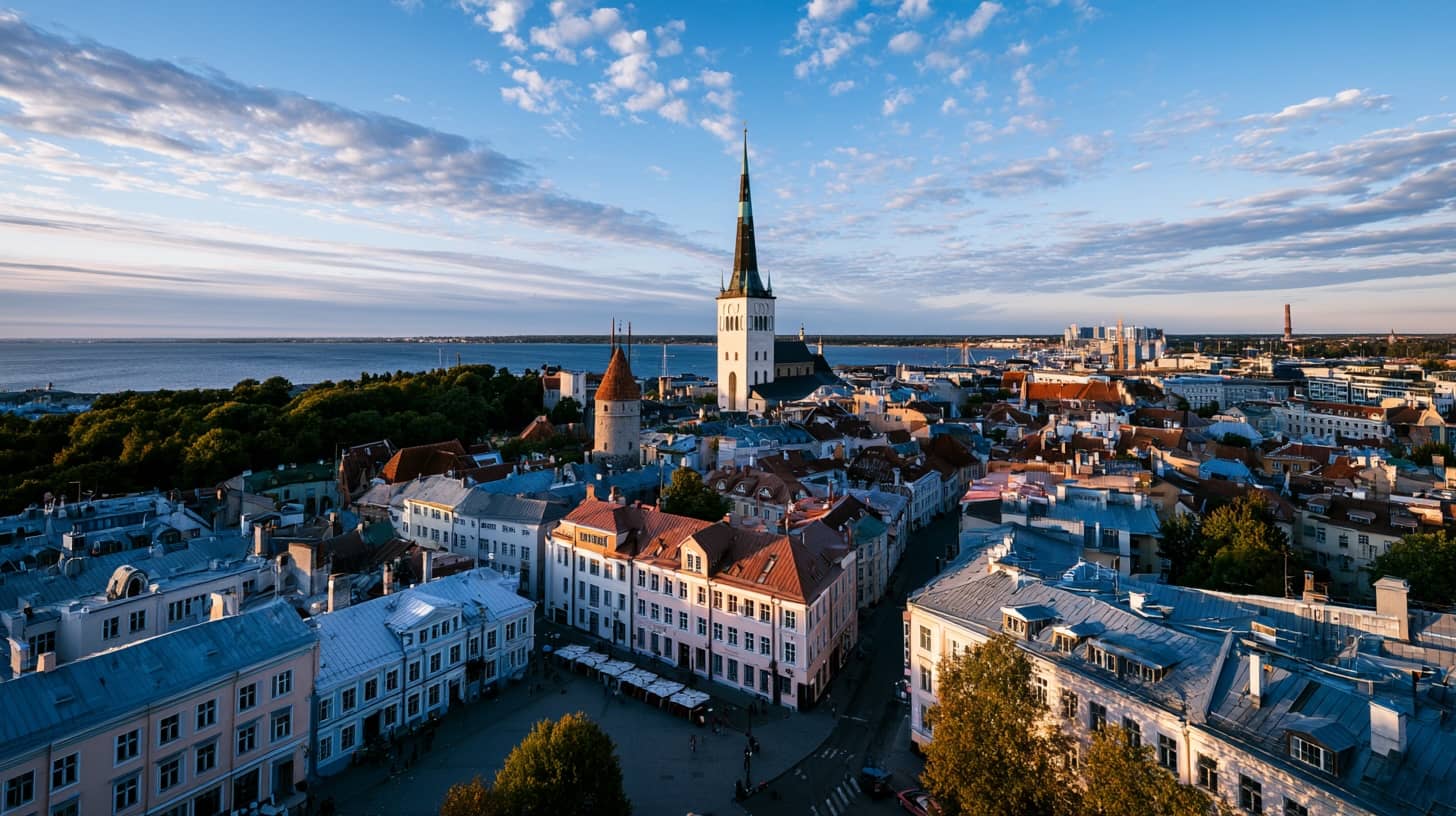
If you only have a couple of nights in Tallinn, the wrong neighbourhood can quietly shape the whole trip. Sleep too deep inside Old Town and you may get the storybook setting without much sense of the city’s daily rhythm. Choose Kalamaja and you trade medieval drama for better cafés, smarter design hotels, and a more human pace.
That is the real decision. Do you want to wake up inside the postcard, or just beside it, where you can still walk to dinner without feeling funnelled through souvenir stalls and tour groups?
Start with the simplest question: what do you want to do after dark?
If your ideal evening is a long dinner, a drink, and a short walk back to bed, Old Town makes sense. If you prefer drifting into a good café for breakfast, browsing independent shops, and staying in a neighbourhood that still feels connected to local life, Kalamaja wins on points.
There is no dramatic wrong answer here. Tallinn is compact enough that you can move between the two quickly, but where you sleep changes the texture of the trip more than the map suggests.
Old Town is best if you are in Tallinn for a first visit, a short stay, winter weather, or a classic city break with minimal logistics. Kalamaja suits travellers who prefer design-led hotels, calmer streets, and an easier morning routine. I usually think in terms of friction: which neighbourhood will make the least amount of work for the trip you want?
Old Town: best for atmosphere, history, and low-effort sightseeing
Old Town is the obvious choice if you want Tallinn’s medieval centre on the doorstep. The main advantage is not just the scenery; it is the ability to step out early, before the streets fill, and see places like Town Hall Square, St Catherine’s Passage, and the winding lanes around Toompea without anyone rushing you.

This part of the city is compact, walkable, and slightly theatrical in the way historic centres often are. That can be charming in the evening, especially near Raekoja plats, but it also means you need to accept a certain amount of tourist traffic and the occasional restaurant that is more committed to the view than the food.
For a short trip, I would still recommend Old Town for people who care more about architecture and easy access than neighbourhood character. If you want to visit the Old Town’s official sightseeing highlights, staying here cuts down the number of times you climb the same hill in one day. That matters more than you think after the third museum.
Where Old Town works best
Upper Old Town is better if you want a quieter night and do not mind a steeper walk. Lower Old Town gives you faster access to cafés and restaurants, though it can feel busier in the evening. Either way, I would stay just inside the walls or immediately beside them rather than too far toward the harbour, unless you are prioritising transport over atmosphere.
This neighbourhood is especially good for travellers who like being able to walk to the Estonian History Museum, the Kiek in de Kök fortifications, or Toompea viewpoints without planning the whole day around transit. It is also the safer bet in winter, when you may be grateful for the shortest possible route between a warm lobby and dinner.
Kalamaja: the better everyday base for a longer stay
Kalamaja is where Tallinn starts feeling lived-in rather than staged. The wooden houses, small courtyards, and converted industrial spaces give the district a softer rhythm, and the streets around Balti Jaam are practical in a way that suits travellers who like to move through a city rather than simply look at it.
This is the area I would choose for a three-night stay or longer. You get better access to breakfast spots, calmer evenings, and a stronger sense of what modern Tallinn actually does with its mornings: coffee, errands, markets, and a fairly tidy amount of style.
The district also gives you easy access to Telliskivi, which is useful if you want design shops, restaurants, and contemporary culture without staying in the busiest part of the centre. The balance is appealing: close enough to Old Town to walk, far enough away to hear birds instead of tour guides.
For a broader sense of the neighbourhoods, it helps to compare them with the city’s own transport and district map via the Tallinn city government pages, especially if you are checking tram access or thinking about where you will arrive and leave.
What Kalamaja is good at
Kalamaja suits travellers who care about cafés, casual lunches, and design hotels that do not feel overdecorated. It also works well if you like starting the day slowly, because the neighbourhood offers enough to do before you even reach Old Town. That includes the Balti Jaam Market, the edge of the harbour, and a fair number of streets worth wandering without any grand plan.
If you enjoy a slightly more contemporary city feel, Kalamaja tends to be the better match. It is less about monument-to-monument sightseeing and more about a comfortable routine: coffee, a museum, a walk, dinner, bed. That sounds plain, but plain is underrated when your travel days are already full.
How the two areas feel after breakfast
In Old Town, breakfast is often a tactical decision. You may be choosing between convenience and quality, with a few places that do both and several that survive on location alone. The upside is that you can be at the Alexander Nevsky Cathedral, St Olaf’s Church, or a museum within minutes.
In Kalamaja, breakfast is part of the neighbourhood’s normal life. Cafés around Telliskivi and the streets nearby tend to feel less hurried, and the whole area is better suited to lingering over coffee before heading out. You also tend to get more space, which is useful if you dislike squeezing your suitcase between tables and coat racks.
That difference matters on a city break. If your mornings are precious, Kalamaja gives you a gentler start. If your mornings are for seeing famous places before the day gets moving, Old Town makes more sense.
Hotels, guesthouses, and the sort of stay each area rewards
Old Town offers the classic options: historic hotels, boutique guesthouses, and a few polished properties that lean into the setting. I would book here if the building itself matters to you, or if you want a stay that feels tied to Tallinn’s older architecture. Just check the room layout carefully, because medieval charm and practical luggage space do not always travel together.
Kalamaja is better for newer design hotels and apartments with more honest proportions. You are more likely to find rooms with better light, easier access, and fewer compromises. For longer stays, that is usually the smarter call.
If you are choosing between a grand old building and a modern room that actually works, I tend to favour the latter unless the historic setting is central to the trip. No one remembers the wallpaper fondly if the bathroom is inconvenient.
There is one exception: if this is your first time in Tallinn and the weather is poor, Old Town can be worth paying extra for because it reduces the amount of wet, icy, or simply tedious walking. A compact base is a luxury in winter.
Walkability, trams, and the practical side of moving around
Both neighbourhoods are walkable, but in different ways. Old Town is the easiest for sightseeing on foot, while Kalamaja is the more comfortable everyday walking district, especially when you are going to cafés, the market, or a dinner reservation in Telliskivi.

Trams are handy if you are arriving from farther out or want to avoid carrying bags through narrow streets. Tallinn’s official public transport information is useful if you plan to use buses or trams from the airport or ferry terminal, and the city keeps the system relatively straightforward for visitors.
From Old Town, you are close to a lot of landmarks but not always to the most pleasant daily rhythm. From Kalamaja, you may walk a little farther for the most famous sights, yet the route itself is usually more pleasant because it passes through a neighbourhood that feels like part of the city rather than a set built for visitors.
For travellers who like to walk home after dinner rather than hunt for taxis, both areas work. Kalamaja just makes the walk more interesting.
What to book if you care about food and coffee
If your trip revolves around cafés, brunch, and an easy lunch, Kalamaja has the stronger case. The area around Balti Jaam Market and Telliskivi gives you more freedom to eat like a person with a schedule, not a tourist scavenging for the nearest serviceable plate.
Old Town has good places too, but you need a little more judgement. The best meals are there, yet the neighbourhood also has a high concentration of restaurants that rely on the view and the footfall. I would book Old Town for dinner if I had a shortlist, not if I expected to make decisions on the fly.
If markets are your thing, the Balti Jaam Market is one of the most practical reasons to stay in Kalamaja. It is useful for breakfast, casual bites, and the sort of low-stakes browsing that helps on arrival day when your energy is still somewhere over the Baltic Sea.
My practical rule for choosing between them
I would stay in Old Town if this is a two-night trip, you plan to visit museums and landmarks heavily, or you like historic atmosphere enough to accept a bit of trade-off. I would stay in Kalamaja if you prefer mornings that feel normal, meals that do not require a safety briefing, and streets where locals actually seem to be going somewhere.
There is also a sensible hybrid option: stay in Kalamaja and walk into Old Town for sightseeing. The distance is short enough to make that easy, and you get to return to a neighbourhood that remains pleasant after the day-trippers have gone to the harbour or the next stop on their Baltic itinerary.
If your budget is fixed, spend it on location before decoration. Tallinn does not need you to overthink luxury; it needs you to choose a base that fits the pace of your trip. For most travellers, that means Old Town for the headline stay, Kalamaja for the better lived-in one.
And if you still cannot decide, ask yourself one final question: do you want to wake up inside the old city, or just close enough to walk there in ten minutes after a decent coffee?
Neighbourhoods I would keep on the shortlist
If you want to widen the search slightly, the Old Town edge near Toompea is worth considering for quieter nights and better views. It can feel a touch more residential while still keeping you close to the main sights.
Near Balti Jaam, the line between Kalamaja and the centre is useful if you want the practical benefits of both. You are close to markets, transit, and the edge of Old Town, which is often the sweet spot for travellers who like a short walk but not a noisy one.
Outside those two, I would only branch out if you already know Tallinn well, or if you have a specific reason such as a work trip, a spa stay, or a hotel you really want. For most visitors, these two neighbourhoods are where the choice is actually worth making.
The bottom line
Old Town is the better answer for atmosphere, classic Tallinn scenery, and the easiest sightseeing logistics. Kalamaja is the better answer for coffee, design, calmer mornings, and a stay that feels more like daily life than theatre.
If this is your first trip, Old Town is the safe, sensible pick. If you care about where you will be between meals, Kalamaja is the one I would quietly back. Either way, you are close enough to see the other side before you leave, which is the ideal arrangement in a city this compact.
My advice is simple: choose the neighbourhood that matches your pace, not just your postcard preferences. The room should make Tallinn easier, not merely prettier.