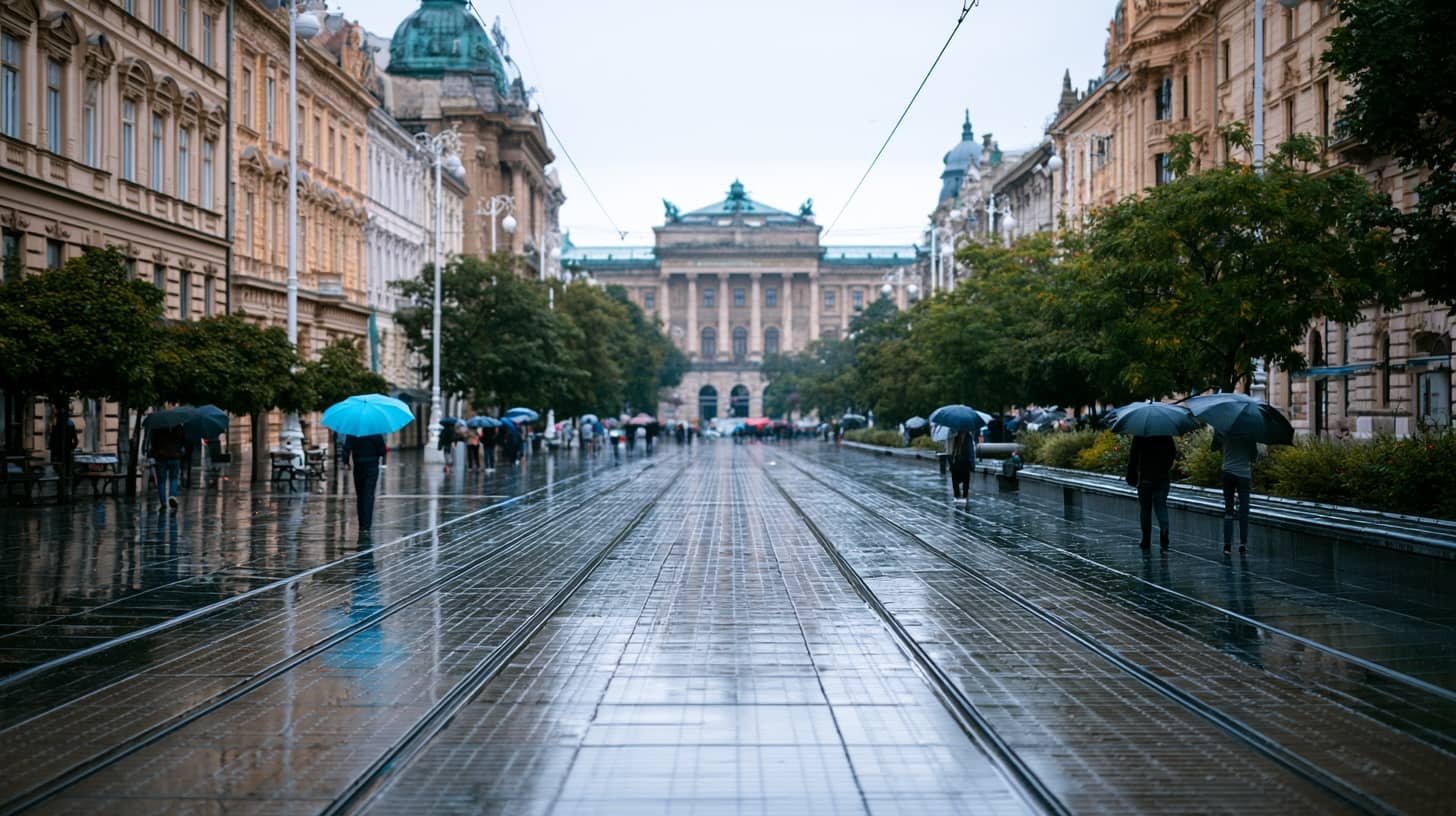
Rain can change the mood of a city, but it does not have to cancel the day. In Zagreb, a wet afternoon is less an interruption than a cue to slow down, look closely, and move between museums, cafés, and solid old buildings without trying to cover too much ground.
I like a city better in weather like this. The tram rails shine, the pavements thin out, and the centre becomes easier to read when you are not hurrying to “make the most” of anything. If you prefer your travel a little considered, a rainy Zagreb afternoon built around museums is a very good way to spend it.
Start in the centre and let the weather set the pace
The easiest way to approach Zagreb in rain is to keep the day compact. The upper city and the lower city sit close enough together that you can move between them without turning the afternoon into an endurance test, especially if you are happy to pause for coffee when the sky looks serious.
I would begin near Ban Jelačić Square, because it gives you a clear reference point and straightforward tram access. From there, the museum-rich centre opens up in both directions: uphill toward the historic core, and outward into the more formal streets where galleries, institutions, and handsome façades sit out the weather with quiet composure.
If you are building the day around a small museum sequence, think in short walks rather than grand treks. Zagreb suits that approach. It rewards a measured pace, and in rain a decent coat feels more appropriate here than a polished city-break look anyway.
The Museum of Broken Relationships is still the sharpest first stop
If you only do one museum, make it the Museum of Broken Relationships. It is compact, sharp, and emotionally well edited, which is exactly what a rainy afternoon calls for. The concept is simple enough to explain in a sentence, but the objects and notes keep it from feeling clever for its own sake.
What I like most is that it gives Zagreb a contemporary edge without trying too hard. The stories are intimate, sometimes funny, sometimes properly sad, and the museum knows when to stop. That restraint matters in a city where too many institutions can feel as though they are asking for more patience than they deserve.
It also works well as a first stop because it does not exhaust you. You leave alert rather than drained, which is useful if the rest of your afternoon includes a couple more museums and one or two cafés worth lingering in.
Walk uphill for the city’s older, quieter rooms
From there, I would head toward the upper town, where the streets narrow and the mood turns more architectural. The climb itself is part of the experience, even in rain, because the stone lanes, old lamps, and modest civic buildings give you the feeling of moving through a city that still remembers how to be a capital.
The Klovićevi Dvori Gallery is especially good when the weather is bad and you want something with scale. The exhibitions are housed in a handsome Baroque setting, and the rooms feel generous without becoming theatrical. It is one of those places where the architecture quietly improves the visit.
Nearby, the Zagreb City Museum adds useful context if you want the city to make more sense in your head. I tend to value museums that help explain how a place formed itself, rather than simply how it markets itself, and this one does that job properly.
Use the Croatian Museum of Naïve Art as a palate cleanser
Not every museum needs to be heavy. The Croatian Museum of Naïve Art is a reminder that a good afternoon can also include colour, directness, and a little human oddity. It is small enough to sit neatly between larger institutions, and the work on display has a sincerity that avoids feeling over-curated.
This is where Zagreb starts to feel particularly pleasant in bad weather. You move from one indoor room to the next without losing the thread of the day, and each stop offers a different temperature of thought. One museum asks for reflection, another for history, another for a slightly raised eyebrow.
If you are travelling with someone who claims not to like museums, this is often the one that changes their tone. It is accessible without being shallow, which is a useful trick and not nearly as common as it should be.
Make time for architecture between the exhibitions
Rain is excellent for architecture because it makes façades read more clearly. The city’s centre is full of buildings that deserve a slower look: the neat historic lines around the upper town, the more formal streets below, and the occasional Art Nouveau flourish that appears when you are not expecting it.
The Croatian National Theatre is worth pausing for even if you are only passing by. Its bright exterior stands out in wet weather, and the square around it has the kind of proportion that makes a city feel composed rather than merely busy. I also like the contrast between the theatre’s grandeur and the ordinary tram traffic that cuts across the area.
Do not rush past the detail work on the older streets either. Zagreb is at its best when you notice the modest things: painted shutters, worn steps, iron railings, and façades that have weathered into something softer than perfection.
Stop for coffee as if it were part of the itinerary
On a rainy city afternoon, coffee is not a break from the plan. It is the plan. Zagreb has enough cafés to support that approach, and the better ones do not push you out the door the moment you finish your cup.

I would look for a central café with good windows and no sense of hurry. You want somewhere you can drape your coat over the chair, dry off a little, and watch the city continue in miniature outside. The point is not to race through the afternoon; it is to create a few warm intervals between museums so the day feels composed rather than hurried.
If you want a useful reference for timing and pacing more generally, an evening in Zagreb can easily become part of the same slow rhythm, especially if rain keeps your plans close to the centre.
What to pair with the museums if you have extra time
If the rain eases or you simply have more afternoon than expected, there are a few easy additions that keep the day coherent. The Mimara Museum is a classic choice if you want a larger collection and a more formal setting. It will not charm everyone equally, but it does give you a fuller sense of the city’s cultural ambitions.
The Museum of Illusions is less in my personal line of taste, though I can see why some travellers like it as a lighter stop. If your energy is fading, or if you are with someone who prefers interactive displays to solemn galleries, it can work as a final indoor diversion.
And if the weather turns merely damp instead of properly unpleasant, consider the walk between the upper city and the lower city as a museum of urban texture in its own right. Zagreb’s streets are not showy about this, which is precisely why they are pleasant to spend time in.
Practical notes for a rain-proof Zagreb afternoon
The city is manageable on foot, but rain makes a few practical choices matter more. Good shoes help more than you might expect, especially if you are moving across older paving stones and sloping streets in the upper town. An umbrella is useful, though I would still rely on a decent waterproof coat when the weather turns earnest.
Trams are your friend if you want to reduce dead time between stops. They are not complicated to use, and they can save your patience when the weather is too wet for unnecessary walking. If you are staying centrally, the city becomes much easier to enjoy because you can duck back to your hotel between museum visits without feeling as though you have abandoned the afternoon.
- Begin near Ban Jelačić Square for simple orientation and transit access.
- Keep the museum route compact: one upper-town stop, one lower-town stop, one café pause.
- Carry cashless payment options, but do not assume every tiny café will be equally effortless.
- Leave room for a second coffee; rainy afternoons expand to fit them.
- Use museums with a range of moods, not three heavy ones in a row.
Where to pause if the day wants to become dinner
One reason I like this kind of itinerary is that it can slide neatly into evening without any dramatic transition. If you end up staying out longer than expected, the centre gives you enough choice for an easy dinner or a glass of wine before heading back to your hotel.
The important thing is not to over-program the last part of the day. Rain often tempts people to “use up” time indoors, but Zagreb works better when you leave a little slack in the schedule. Museums are more satisfying when you know there is a table, a tram, or a dry corner waiting afterwards.
For adults travelling independently, that is the appeal of a city like this in poor weather: you can still have a proper day. It may be less about spectacle than about sequence, but sequence matters. A good museum, a good coffee, a short walk under grey sky, and another museum are often enough.
Why this city suits a slower indoor day
Some places seem to demand that you go outside to understand them. Zagreb is less fussy. Its centre supports an indoor day well because the museums are close together, the architecture is worth watching even in the rain, and the cafés feel like part of the civic fabric rather than an accessory to it.
That combination makes the city especially agreeable for short-trip travellers who prefer a bit of structure. You are not chasing an all-day list of sights. You are moving through a compact urban pattern, letting the weather narrow the options in a way that is strangely freeing.
By the time evening arrives, the city usually feels more composed than it did under a dry, ambitious itinerary. That is the trick of a rainy afternoon here: it does not reduce Zagreb to a backup plan. It reveals the city at a better pace.