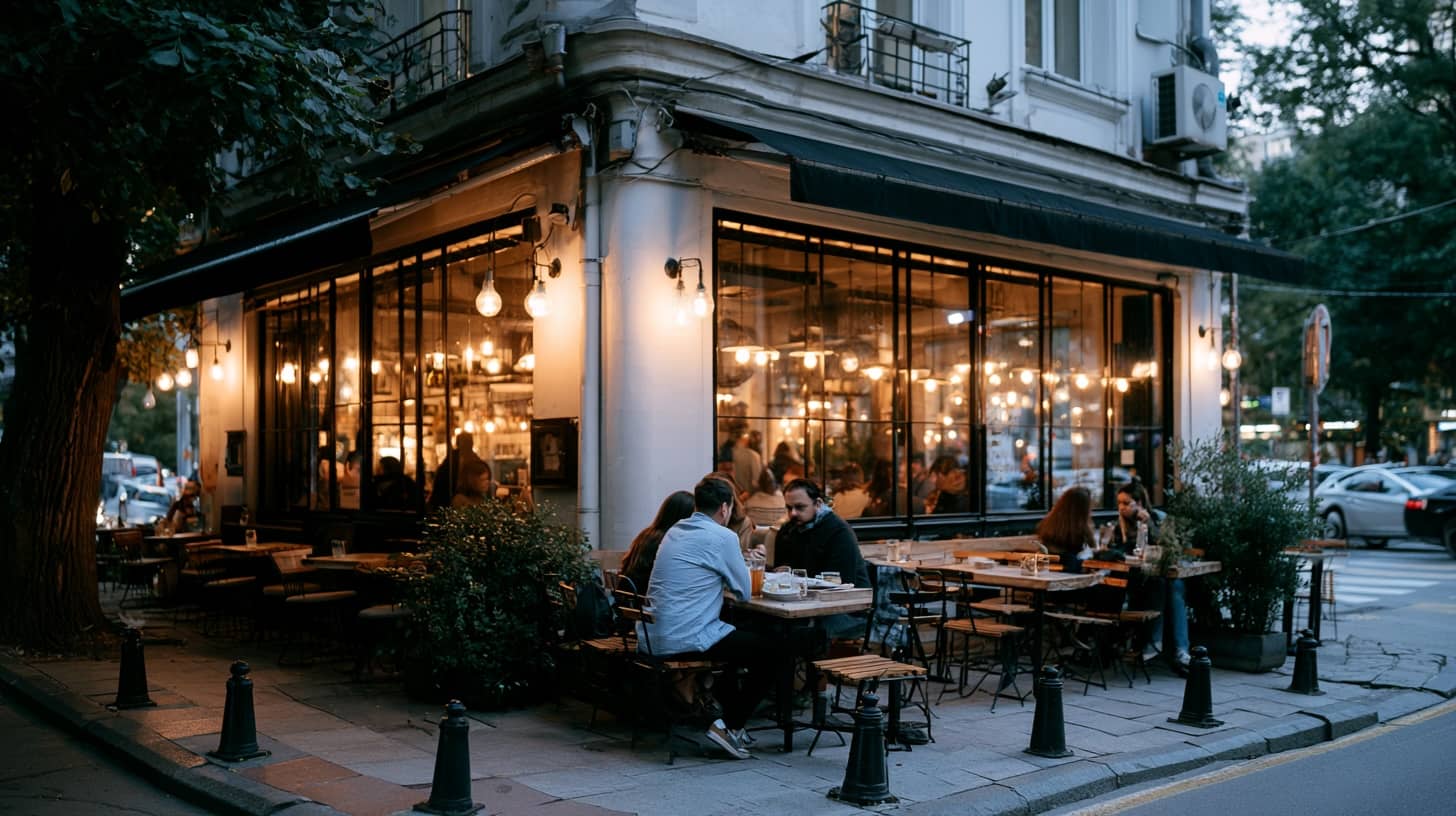
Late flights are annoying in exactly the ways that matter: the taxi queue thins out, your appetite returns at the wrong hour, and every ordinary decision suddenly feels a little more ambitious than it should. In Sofia, though, a late landing is not a disaster. It is mostly a logistics exercise with a few sensible choices, and the city still gives you enough options to keep arrival from turning into a small personal crisis.
What works after dark is rarely glamorous, but it is often efficient. You can get into town, find a proper meal if the timing is kind, check into a hotel without much fuss, and even take a quiet first walk if you are the sort of traveller who likes to calibrate a place before breakfast. The point is not to do everything at once.
First, do not overcomplicate the airport exit
Sofia Airport is close enough to the centre that the city does not feel like a long-haul punishment after landing. If you are arriving late, the main question is usually whether to take a taxi, use the metro if it is still running, or wait until morning routines are easier. The sensible move is to know your address, know your arrival time, and decide before you step into the terminal.
For most travellers, a licensed taxi is the least exhausting answer. The city’s official taxi provider at the airport is OK Supertrans, and using the official stand is worth the small extra effort. Sofia has enough reports of drivers approaching arrivals that it is better to sound cautious than clever here.
If you are landing early enough for public transport to be useful, the metro is clean, direct, and refreshingly free of drama. The airport station connects you to the city without requiring you to decode an unfamiliar overnight bus system. For current schedules and route details, the safest source is the official Sofia Metropolitan site.
Where to stay if the night is already half gone
Late arrivals reward boringly sensible hotel choices. Look for somewhere near the centre, near a metro stop, or at least on a straightforward taxi route from the airport. If the desk closes early or check-in feels improvised, you will remember it at 1 a.m., and not fondly.
Areas around Serdika, Oborishte, and the city centre are the easiest places for a first night. They are close to transport, they keep morning plans simple, and they reduce the odds of dragging a suitcase through a half-silent district while trying to locate an address tucked behind a courtyard gate. That is not a heroic arrival; it is just tired.
If you are choosing between style and convenience, lean toward convenience for this specific situation. Sofia has appealing boutique hotels and well-run small properties, but on a late landing the best hotel is the one with clear instructions, a responsive front desk, and a room you can reach without decoding the building like a side quest. If you want a more considered base for the rest of your stay, you can also look at the best time to visit Sofia to see how timing changes the city’s rhythm.
What still works for food after dark
The hard truth: if you land very late, many of the city’s better kitchens are already closed. That is normal, and it is better to accept it than to begin your trip chasing a mythical all-night meal. The useful question is not “what is open?” but “what is open and still decent?”
In practical terms, Sofia can still offer you a late sandwich, a soup, a slice of banitsa, a grilled plate, or a café that has stretched into casual evening service. Around the centre, places near Vitosha Boulevard, Shishman Street, and the streets feeding into Sveta Nedelya are the likeliest to have something edible going. I would not bet my first impression on a place that looks as though it is surviving purely on ambient lighting and optimism.
If you want to be prepared, buy a snack before boarding your flight or at the airport. That way, if the city greets you with a closed kitchen and a sleepy taxi ride, you are still in control of the evening. It is not romantic, but neither is eating whatever happens to be left in a petrol station at midnight.
For a more proper next-day meal, the city’s appetite becomes much more interesting after sunrise. That is when baked breakfasts, yogurt, eggs, and coffee start making sense again, and Sofia’s café culture settles into something far better than any overnight snack can manage.
The first walk should be short and strategic
If you arrive with enough energy to leave the hotel, keep the first walk modest. Sofia is easy to overestimate at night because the central streets are straightforward, but your internal map is still on airplane mode. A short loop gives you a sense of place without demanding much judgment.
The most sensible late-evening or pre-bedtime stroll is around St Alexander Nevsky Cathedral, Patriarchal Cathedral of St. Nedelya, and the broad civic space around Ivan Vazov National Theatre. This gives you a feel for the city’s grander centre without requiring a deep commitment. You will see domes, façades, street lamps, and the odd taxi cutting through empty space with surprising confidence.
If you are too tired for walking, do not make a moral issue out of it. Sit down instead, drink water, and wait until morning. Sofia does not punish you for declining a heroic first night.
When the city is still open, these areas are your best bet
A late Sofia arrival is easier if you understand the city’s geography in simple terms. The centre is compact, and that helps enormously. If your hotel is central, you can still find a drink, a snack, or a calm corner without turning the night into transport theatre.
Vitosha Boulevard is the obvious name, but it is not always the answer. It can be useful for a quick drink or an easy walk, yet late-night choices there can skew predictable. I prefer it more as a reference point than as a final destination.
Shishman Street and the surrounding streets often feel more useful for a low-key stop, especially if you want a bar that is social without becoming chaotic. Oborishte is quieter and better if your idea of a good first night is a drink rather than an event. If you are the sort of traveller who likes a gentler landing, that distinction matters more than it sounds.
For practical purposes, I would avoid trying to “explore” districts on arrival night. Sofia’s charm is not in how much you can tick off in one sweep. It is in how quickly you can settle into the city once you stop acting like you need to earn the trip.
How to move around without wasting energy
After midnight, transport choices become less about elegance and more about reducing friction. Sofia’s centre is walkable, but only if you are already in the centre and not hauling luggage across uneven pavement while calculating whether the next street is uphill in the spiritual sense as well as the literal one.
Taxis are the most sensible default for a late arrival. Keep the destination written in the Latin alphabet and, if possible, in Bulgarian as well. That tiny bit of preparation can save you a round of pointing at a phone screen and hoping everyone involved shares the same mental map of the city.
Public transport is excellent when it fits your timing, but not everything runs at the hour you want it to. If the metro is operating, it is usually the cleanest and least annoying option. If it is not, a proper taxi from the official rank beats improvisation every time. This is one of those cities where being methodical feels stylish enough.
For anyone trying to reach a hotel in the centre, pack light on arrival day if you can. Sofia is not difficult, but late-night bags, cobbles, and a tired brain are a famously unhelpful combination.
If you are hungry, tired, and slightly impatient
That combination describes most late arrivals, so let’s be realistic. You do not need a night out on the first evening. You need an open door, a chair, something warm to eat or drink, and a hotel room that appears when promised. Adult travel is mostly this, and that is fine.
If you reach the centre late enough that proper dining looks uncertain, think in layers. First choice: a simple meal near your hotel. Second choice: a café or wine bar with snacks. Third choice: a supermarket stop for breakfast supplies and water. Fourth choice: admit defeat and start again in the morning with dignity intact.
There is also a case for doing almost nothing. Sofia’s centre is pleasant enough to cross quickly and compact enough to understand in fragments. You can arrive, shower, sleep, and use the next day properly. That is often the better decision, especially if the flight was delayed, the cab took the long route, or your brain is already negotiating with tomorrow’s alarm.
The next morning makes the real difference
A late arrival only feels expensive if the next morning becomes another lost hour. The smarter move is to plan a gentle first day that lets Sofia open itself at a usable pace. Start with coffee, then decide whether you want architecture, museums, or a longer walk through the centre.
If your schedule allows one cultural stop, the obvious candidates are close to the centre and easy to slot in. The National Archaeological Museum gives you a fast sense of Bulgaria’s deep past, while The National Gallery is useful if you prefer art over antiquity. For a first morning, I like places that do not require elaborate transport logic before the caffeine has done its work.
Then, if you want a city view of how daily Sofia actually works, keep walking. Pass through the square around St. Nedelya, follow the pedestrian streets, and notice where people sit, drink, and wait. That is often more revealing than trying to collect landmarks in a hurry.
The practical checklist I would actually use
Here is the short version, because late-night arrivals deserve blunt advice. Keep your phone charged, know your hotel address, and do not assume every driver or café will behave like a 24-hour service counter. Sofia is straightforward, but it is still a city, not an airport brochure.
- Book a hotel with late check-in confirmed in writing.
- Use the official airport taxi rank or the metro when timing works.
- Carry the hotel address in both English and Bulgarian.
- Assume dinner options may be limited after midnight.
- Choose a central base if you are arriving tired.
- Save the first serious sightseeing for daylight.
If you are travelling in winter, that list matters even more. Cold air makes everything feel more complicated, and what seemed like a short walk on a map can turn into an unplanned endurance test. In shoulder season, the city is more forgiving, but the same rule still applies: keep the first move simple.
Why the late landing is easier than it sounds
The good news is that Sofia does not demand a theatrical arrival. It gives you a reasonably close airport, a compact centre, and enough late-night infrastructure to prevent panic if you stay practical. That combination is underrated, especially for travellers who would rather spend energy on the city than on their first transfer.
What works at night is not everything, and that is the point. A taxi, a central hotel, a decent drink, a snack, and a short walk are enough to get you through the first hours with your sanity intact. Then the city opens properly in daylight, which is when Sofia is at its most readable.
So land late if you have to. Just treat the first night as a landing strip, not a performance. Sofia is better that way, and frankly so are most cities.