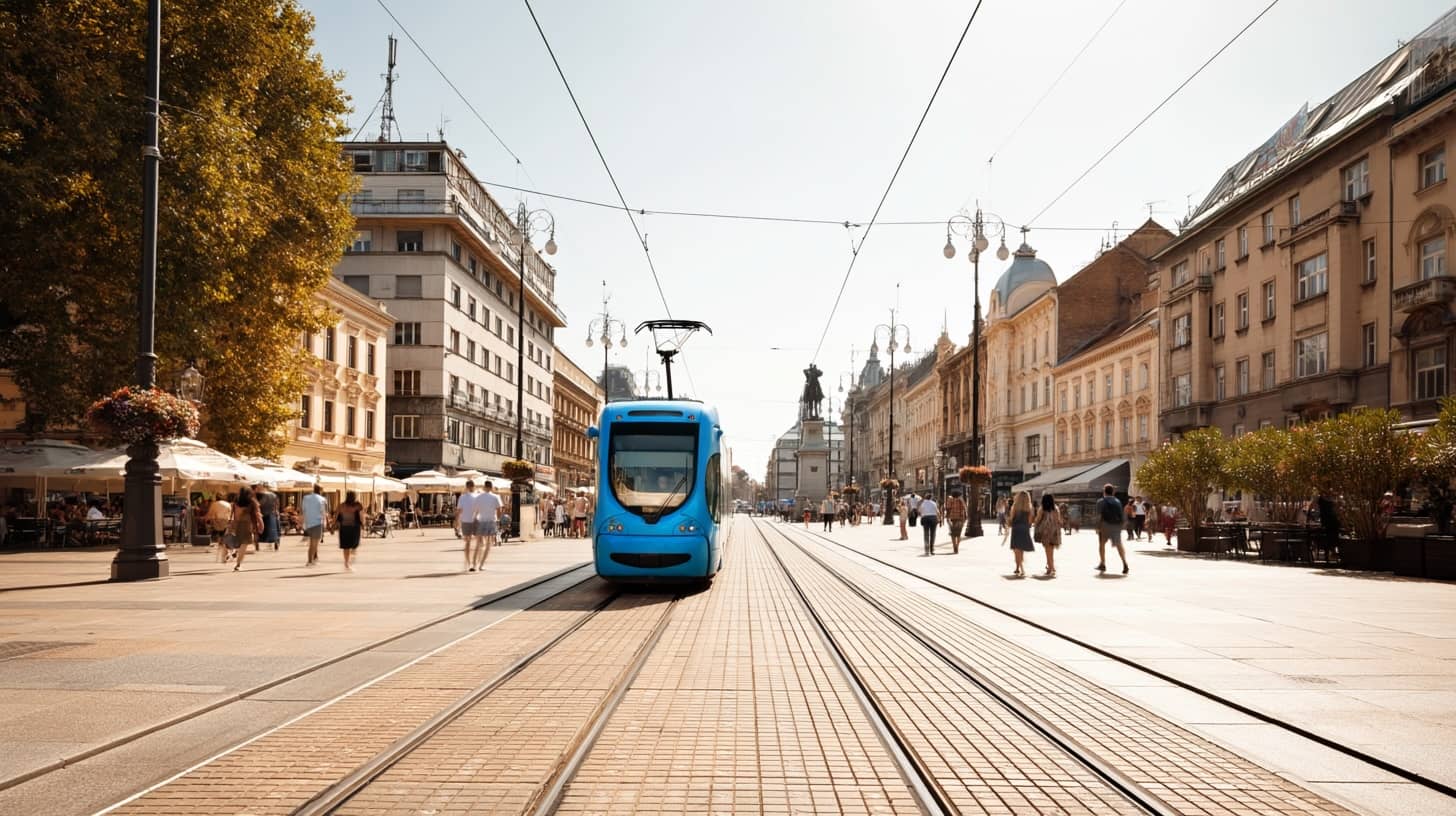
Most first-timers treat Zagreb like a stopover with good manners: arrive, see the Upper Town, drink one coffee too quickly, and move on. That is a mistake, or at least a missed opportunity. The city works best when you let the day stretch a little, because its best qualities do not announce themselves all at once.
Give it one extra night and the place starts behaving properly. The trams make sense, the terraces fill at the right pace, and the short distances between museums, cafés, and old façades stop feeling like errands. Zagreb is not trying to impress you in five minutes. It prefers a slower reading.
Why one more night changes the whole visit
Zagreb is compact enough to be manageable, but layered enough to feel incomplete if you rush. You can cover the obvious landmarks in half a day; you cannot really absorb the city in half a day. The difference between passing through and staying overnight is the difference between checking boxes and noticing rhythm.
That extra night gives you the useful luxuries: a long lunch, a proper museum visit, a dinner that does not have to fit around a train, and a morning after when the streets are quieter and less performative. You start to see how much of the city is lived outdoors, between tram stops, corner cafés, and the walk from one neighborhood to the next.
It also helps that Zagreb is polite to independent travellers. It is easy to navigate, but not sterile. It has enough history to reward attention and enough ordinary city life to keep things from turning into a monument parade.
Start in the centre, then walk uphill
For a first visit, I would begin around Ban Jelačić Square because it gives you the city’s working centre without forcing you into a grand gesture. From there, the lower town spreads out in a neat, late-19th-century grid, with arcades, shops, and a steady stream of trams that make the city feel refreshingly untheatrical.
Keep going toward the Upper Town rather than treating it as a separate outing. The hill is part of the argument. The walk up through Tkalčićeva Street and past the Cathedral area, or by funicular if your knees are making a case for themselves, is where Zagreb starts switching from transit mode to atmosphere.

Once you reach the Upper Town, the city becomes more intimate. St. Mark’s Church is the obvious visual anchor, but what I like most is the surrounding scale: narrow streets, administrative buildings, a few museums, and enough quiet corners to make you slow down without being instructed to.
Spend time on the lower town, not just the postcard streets
The lower town is where Zagreb’s daily life shows up in a way visitors often miss. Zrinjevac Park, with its trees and broad paths, is not dramatic, and that is exactly the point. It gives the city room to breathe, and it is a good place to notice how close museums, cafés, and public buildings sit to one another.
Walk toward the Croatian National Theatre and the surrounding cultural buildings if you want architecture with a sense of order rather than spectacle. The district around the square is elegant in a slightly formal way, full of 19th-century façades and wide avenues that make you feel as if the city still believes in pacing.
If you enjoy museums, this is where an extra night pays off. The Mimara Museum and the Croatian Museum of Naïve Art are both useful stops depending on your tolerance for collection fatigue. I would also make time for the Museum of Contemporary Art if your schedule allows a tram ride south; it gives a broader view of the city’s present tense.
A café break is not optional here
Zagreb understands coffee as a civic activity. People sit, talk, read, and absolutely do not rush through it as if the cup were a receipt. If you are the kind of traveller who thinks a café stop is a delay, the city may re-educate you.

Start with the terraces around Tkalčićeva Street or the quieter streets near the lower town. Order a short coffee, sit outside if the weather is even vaguely cooperative, and let the city pass in front of you. It is a small pleasure, but here it is also a way of understanding how people use public space.
For a more deliberate stop, look for old-school cafés in the centre rather than trying to stage a perfect coffee-hunting expedition. Zagreb’s café culture is not about novelty; it is about habit, which is much more useful. If you want to keep the day easy, this is one of the best reasons to stay the extra night.
Choose one museum well, not three badly
One of the smartest things you can do in Zagreb is stop trying to see everything indoors. The city offers enough museum material to fill several days, but a first visit improves when you choose carefully. I would rather do one meaningful museum and one long walk than sprint through three galleries and remember none of them.
The Croatian Museum of Naïve Art is a strong place to start because it is compact and distinctive, and it tells you something useful about the country’s artistic identity without requiring a dissertation. The Mimara Museum is more expansive and old-fashioned, in the best and worst senses of that phrase, which makes it good for travellers who enjoy a proper collection and do not mind a slightly formal mood.
If the weather turns unfriendly, or if you simply want a slower indoor afternoon, the city’s museums become more practical than picturesque. That is not a criticism. It is a reminder that a city break improves when the weather does not get to dictate the whole plot.
Eat lunch like you have time
Lunch in Zagreb should not be a sandwich consumed while standing under a tram shelter, unless you are making a very specific kind of statement. The city is good at the sort of meal that extends the afternoon without wrecking it, especially on a rainy museum sort of day. Keep it simple: a café terrace, a neighborhood bistro, or a market counter if you want something direct.
Dolac Market is the obvious place to begin. It is busy in a real, useful way rather than a tourist-performance way, with produce stalls and an energy that feels tied to the city rather than designed for outsiders. Even if you do not buy anything, it is worth passing through on the way between the Upper Town and the lower town.

For a no-fuss meal, aim for dishes that feel local without requiring a lecture. This is the sort of city where the best lunch often looks modest and arrives without fuss. That, frankly, is part of its appeal.
Pick a neighborhood that makes the evening easier
If you have one extra night, where you stay matters more than people usually admit. In Zagreb, being too far from the centre is not disastrous, but it does make the evening less elegant than it needs to be. I would rather stay close enough to walk back after dinner than rely on perfect transport timing and goodwill from the weather.
For a first visit, the lower town is the safest bet. It puts you within easy reach of the main sights, cafés, and tram lines, while still feeling like part of a working city rather than a staged historic quarter. If you prefer a calmer base, the edges near Zrinjevac or around the quieter residential streets just off the centre are excellent compromise territory.
For more help deciding where to stay in Zagreb, think in terms of practical luxury rather than labels. A good location here is one that reduces friction. That usually means walkability, decent tram access, and an area where you can find a morning coffee without a scavenger hunt.
Let the evening stay local
Zagreb is a city that improves after dark without turning into a circus. Evening energy is more about conversation, wine, and terraces than late-night chaos, which suits travellers who prefer a dinner with a sense of place. You do not need a grand plan; you need a decent table and enough stamina for dessert.
Tkalčićeva can be lively, though in a straightforward, approachable way rather than a showy one. If you want something quieter, head back toward the lower town and find a bar or restaurant with a little breathing room. The city’s best evenings are often the ones that do not try too hard.
If cocktails or wine are part of your travel logic, keep it measured. Zagreb is not the sort of place where you need to chase the “scene” from one address to another. One good stop is usually enough, which is one reason one extra night works so well.
Make room for a tram ride and a wider view
One of the more pleasant ways to understand Zagreb is by tram. The network is useful, cheap in spirit if not always in polish, and it takes you beyond the neat centre without any drama. If you have the time, ride out to see how the city loosens as it expands.
The Museum of Contemporary Art in Novi Zagreb is the most obvious reason to do this, and it is a good one. The journey is part of the experience, because it moves you from postcard Zagreb into a more everyday version of the city. That contrast is useful; it prevents the visit from becoming too polished and too narrow.
I like this kind of detour on a second day because it gives the city a fuller shape. You see that Zagreb is not just an old town and a square. It is a working capital with modernist edges, broad roads, and a transit system that quietly connects the whole thing.
Practical tips for a smoother first stay
My best advice is to keep the schedule loose and the walking shoes sensible. Zagreb is not a marathon city, but it does ask for more footwork than you may expect, especially if you move between the Upper Town, the lower town, and a museum or two. A tram pass or easy public transport plan helps, even if you only use it once or twice.
- Stay central if you can; it saves time and makes dinner easier.
- Save the Upper Town for a morning or late afternoon when the light is kinder.
- Do not overbook museums; one or two is enough for a first visit.
- Use cafés as rest stops, not just coffee stops.
- Leave one unplanned hour for a market, park, or extra walk.
If you are visiting in colder months, the city still works, but indoor time matters more. That is when museums, cafés, and shorter walking loops become the whole strategy. In warmer weather, the terraces and parks do more of the heavy lifting, which is a fair trade.
One extra night gives the city room to behave
A short stop in Zagreb can be pleasant enough. But one more night changes the tone from transit to stay, and that is where the city becomes easier to like. It lets you see the difference between the headline sights and the daily city underneath them.
For first-time visitors, that matters. You get the architecture, the museums, the tram lines, the coffee habit, and the oddly calming sense that nobody is in a hurry to prove anything; even a place like Ban Jelačić Square only makes the case more clearly. That last part may be Zagreb’s strongest case for lingering.
If you have the option, take the slower version. It is the one that makes the city feel complete rather than merely visited.