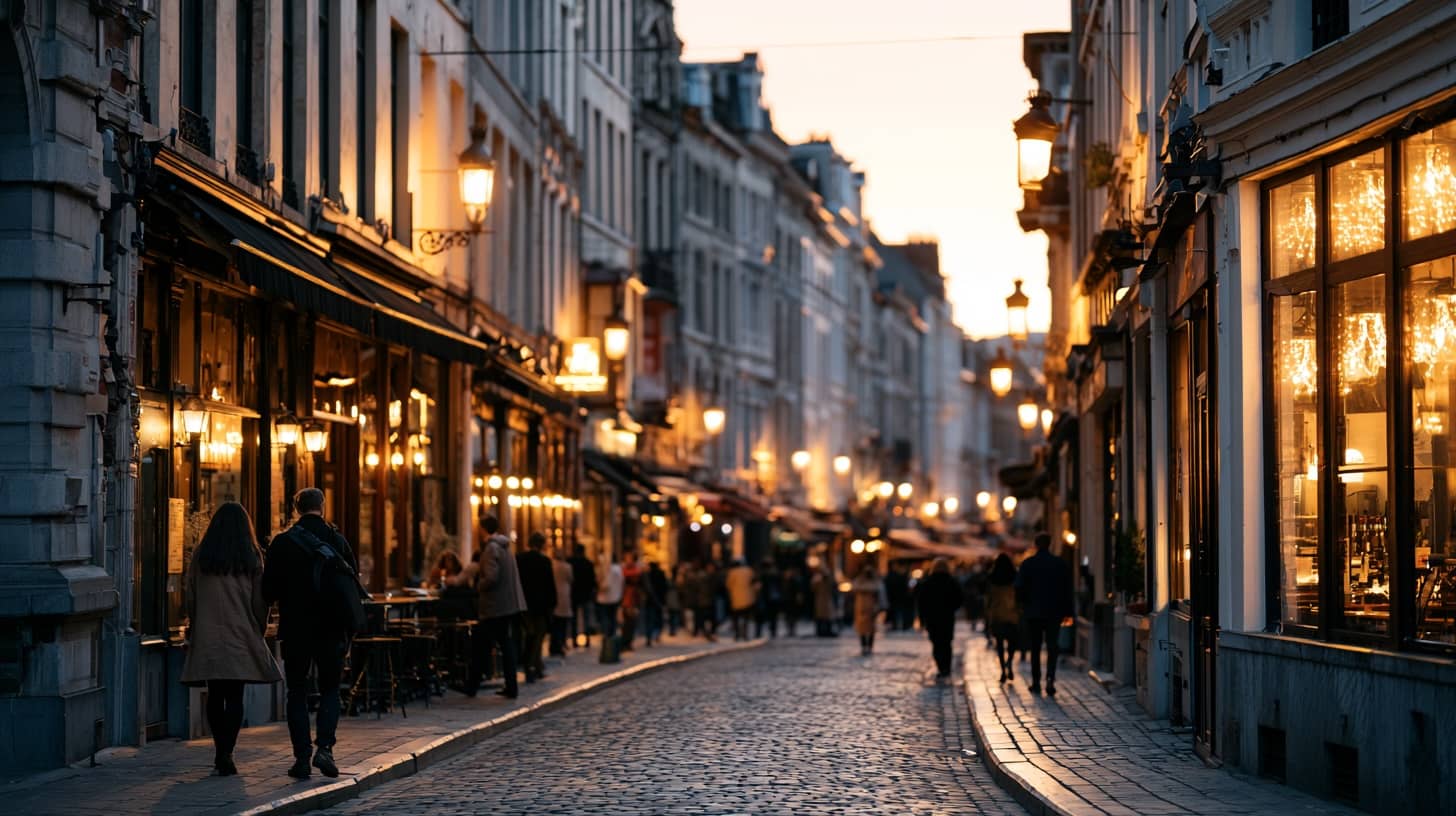
The first cold evening always changes the way I think about dinner. Suddenly I want a room with a little heat in it, a table close enough to overhear other people’s plans, and a menu that encourages grazing rather than commitment.
That is exactly when Brussels becomes appealing in a different register. Not louder, not shinier, just more selective. I want a glass of something interesting, a few plates that do not pretend to be a meal in the strictest sense, and a route that lets me stay out without feeling overexposed to the weather.
Start where the evening feels easiest
On a cold night, I do not begin with the “best” bar in theory. I start with the one that makes it easiest to settle in. In Brussels, that usually means somewhere with a tight wine list, low-stakes lighting, and staff who understand that one person may arrive early and want to linger.
In practice, that often points me toward the centre first, or a neighbourhood with enough after-work energy to keep a room warm without turning it noisy. Around Sainte-Catherine, I look for places that can move from aperitif to dinner without changing personality halfway through the evening. The area is handy if you are still deciding where the night should go.
If you want a broader reference point before committing to a route, I like pairing this kind of evening with a useful lunch map such as Where to Eat in Brussels. The daytime version of the city gives you a sense of which areas feel food-focused rather than merely fashionable.
Wine bars here lean thoughtful, not showy
Brussels does not need to scream about its wine scene. The better places tend to be understated, a little serious about the bottle list, and happy to pour by the glass without making you work for it. I appreciate that. I am not looking for a lecture at 7.30 p.m., only a good pour and a staff member who can steer me away from something dull.
Places like Verigoud, La Buvette, and L’Ultime Atome give you different versions of the same pleasant idea: a room where wine is treated as part of dinner, not a separate performance. Wine Bar des Marolles is another name that fits this mood, especially if you want a neighbourhood stop rather than a polished occasion.

What I like most is the range. You can find natural wines, classic French-leaning lists, and bottles from smaller European producers, often in places that are far more relaxed than their menus suggest. That balance matters on cold evenings, when you want the room to do half the work for you.
Small plates work better than a formal dinner
Brussels is a city that understands the value of letting dinner unfold in stages. On a colder evening, I prefer dishes that arrive with some flexibility: pickles, cheese, seafood, croquettes, tartare, vegetables with enough seasoning to stand up to wine. The trick is to avoid the trap of ordering too much just because everything sounds excellent after the first glass.
That is why I like small plates around wine bars rather than a single, heavy main course. It lets me eat the way the evening is moving. A plate of sardines or anchovies, something creamy with bread, perhaps a sharper vegetable dish, then another glass if the mood holds. Simple, but not dull.
Brussels can be particularly good for this in places that respect the aperitif hour without dragging it out into fussiness. I am thinking of spots where sharing is built into the rhythm rather than framed as a lifestyle choice. If you can eat with one hand and keep the other free for your glass, the room is probably doing its job.
Ixelles is the obvious answer, but not the only one
When the weather turns properly cold, I keep circling back to Ixelles. It has enough restaurants, bars, and cross streets to make an evening feel fluid, and it rarely feels like you have made a disastrous decision by ending up there. If you want to stretch the night after a glass or two, it is one of the easiest parts of the city to do that in.
I would pay attention to the area around Place Flagey and the streets around Châtelain. They are not identical, and that is part of the appeal. Flagey has more motion, more people in transit; Châtelain can feel a touch more polished, with bars and dining rooms that know they are serving a crowd that still cares about good glassware.

If weather is pushing your plans indoors, a rainy day in Brussels can easily become a rainy evening here too. Ixelles is useful because it does not require heroic walking between stops. You can keep the night compact and still feel like you have actually gone somewhere.
Saint-Gilles and the city’s slower after-dark rhythm
Saint-Gilles is where I go when I want the evening to feel a little more local and a little less neatly packaged. It has that easy Brussels mix of elegant façades, lived-in corners, and bars that seem to have grown into their streets rather than been dropped in for effect. That matters more than people admit.
Here, I look for spots with a calmer pace and a better sense of room to breathe. The best wine bars in this part of town often feel as if they were designed for conversation first and photos second, which is exactly the right priority on a cold night. The people-watching is good too, but not in an exhausting way.
If you want the evening to start with a short walk, Saint-Gilles gives you some excellent architecture to pass on the way to a table. Art nouveau fans will already know the area’s value, but even without a lecture on façades, it is a pleasant neighbourhood for moving between dinner and another drink without losing momentum.
What to order when you do not want a full meal
I think the best cold-night order is one that balances salt, acid, and comfort without tipping into heaviness. In Brussels wine bars, that can mean a board with cheese and charcuterie, but I would not stop there unless I had to. The more interesting places give you a few sharp or seasonal dishes that make the wine feel more alive.
Look for plates that travel well across a table: smoked fish, mushrooms, fennel, chicory, roast vegetables, croquettes with a point of crispness, or tartines that are actually worth eating. Brussels is also a city where a simple buttered bread basket can still matter. I have no problem saying that bread can rescue an otherwise mediocre plate.
If a menu leans heavily into richness, I usually try to counter it with something crisp in the glass. A mineral white, a chilled red, or a pét-nat can reset the evening nicely. This is not the place for overthinking, just for not letting the wine become an afterthought.
A practical route for one colder evening
If I were planning this properly, I would keep it simple. Start in Ixelles or Sainte-Catherine, have one glass early, then move only if the first stop feels too tidy or too loud. Brussels rewards a route that leaves room for improvisation, not a programme packed so tightly that it starts feeling like a school trip for adults.
- Begin with a wine bar that opens the evening gently, not a place with a queue or a celebrity reputation.
- Order one snack first, then decide whether you actually want more food.
- Walk between stops only if the weather is tolerable; otherwise, keep the area compact.
- Choose a second place with a different mood: quieter, warmer, or more bottle-focused.
- Stop before the evening becomes a project.
The useful thing about Brussels is that it can absorb this kind of loose planning. You do not need to chase some grand route across the city. Two good stops and a short walk between them often produce a better night than three over-ambitious reservations and a lot of regret.
Where the city gets properly comfortable
There is a particular pleasure in entering a room after a cold walk and immediately feeling the temperature change around your shoulders. Brussels has plenty of places that do this well, especially the ones that resist the urge to over-design themselves. I prefer wood, honest lighting, and tables that are close enough to make the room feel social but not cramped.
That comfort can come from old-school wine bars, contemporary bistros, or places that blur the two. The best examples make it easy to stay for another glass without announcing that you are staying for another glass. That kind of ease is underrated, and in winter it becomes the main event.
If you are after a slightly broader cultural evening before dinner, I would also keep The cultural side of Brussels in mind for earlier in the day. A museum-heavy afternoon and a wine-bar evening make an excellent pairing when the city gets colder than expected.
Don’t ignore the bottle shops and wine counters
Not every good night needs to happen at a table. Sometimes the smartest move is to buy a bottle from a serious wine shop, then settle into a small bar that is happy to open it for you. Brussels has enough well-stocked places for that to be a viable plan, especially if you are traveling with someone whose drink preferences are more exacting than yours.
I also like the way a few wine bars function almost like edited bottle rooms. They let you discover producers you would not necessarily order from a full list, and they often lead you toward regions and styles that suit colder weather: Jura whites, lighter reds, amber wines, sharper Champagnes. It is the opposite of random, which is why it works.
If you like the idea of taking a bottle home, ask early and politely about takeaway. Not every room wants to become a shop, but some are happy to let the evening extend beyond the last sip. That can be the best souvenir from a winter night out: something you actually want to open later.
How to keep the evening feeling grown-up, not precious
My biggest preference here is for places that treat pleasure as normal. No one needs an essay with their dinner, and no one needs to be made to feel behind the curve because they simply wanted a nice glass of wine and some food that tasted cared for. Brussels can do that better than it gets credit for, even around the Grand Place.
The sweet spot is a room with enough polish to feel deliberate, but not so much that you are afraid to ask for a second piece of bread. A cold evening calls for warmth, not theatricality. Give me a clean table, a list that makes me curious, and a plate I can finish without performing appreciation for the room.
That is why wine bars and small plates suit the city so well in winter. They let Brussels be itself after dark: composed, slightly understated, and more enjoyable the less you force it. If you keep the evening loose, the city tends to meet you halfway.