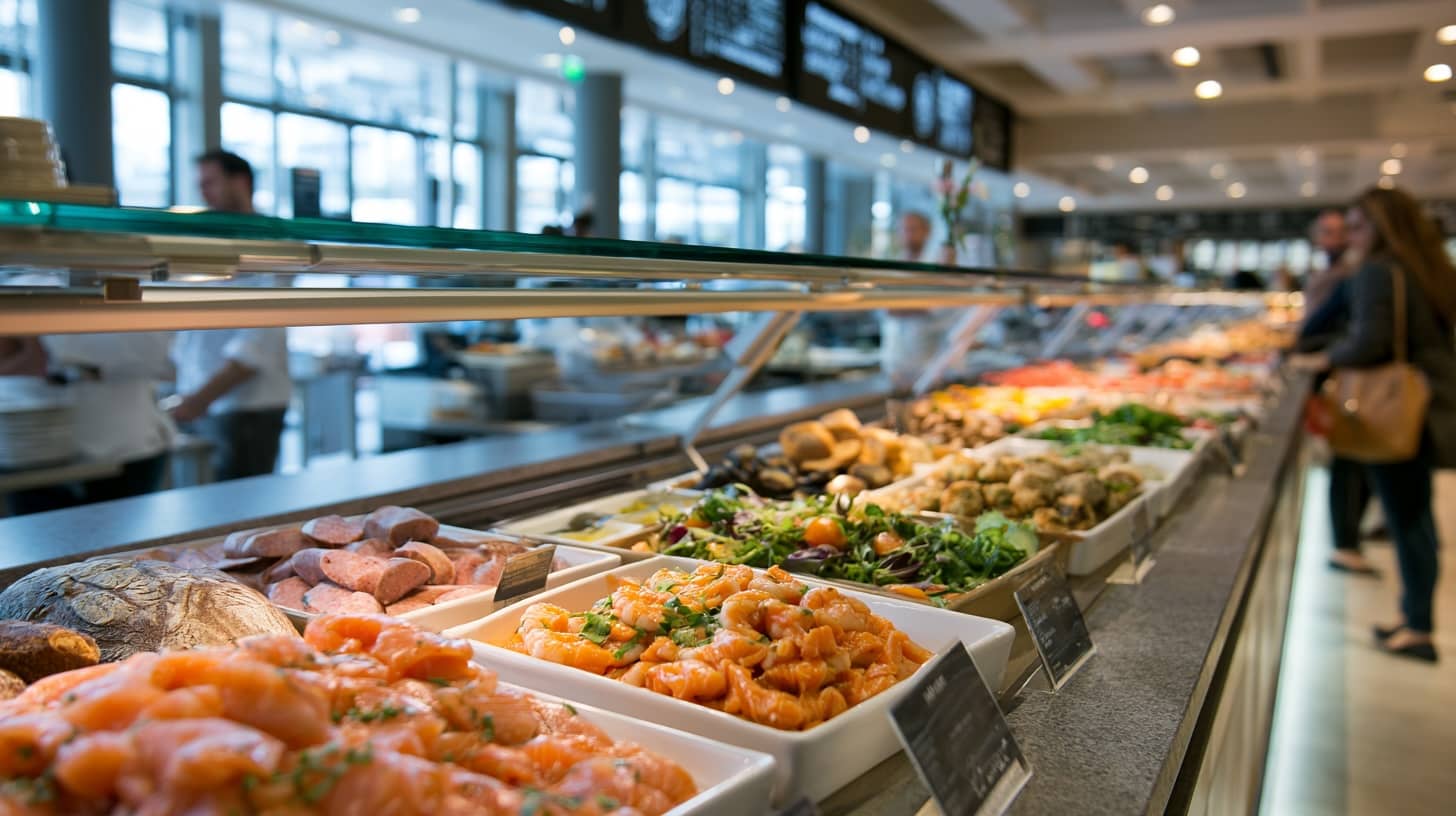
If your first meal in Lyon is a sad café croissant beside a tram stop, you are doing the city a disservice. I would start somewhere with more range, more appetite, and less guesswork: a food hall, where breakfast can become lunch before you’ve even decided what day it is.
Lyon takes food seriously, but that does not mean you need to begin with a multi-course splurge. A food hall gives you the practical version of the city’s culinary personality: efficient, a little indulgent, and full of choices that are easier to enjoy before a museum, a river walk, or a long afternoon of wandering.
Why a food hall works so well for a first meal
There is a particular relief in arriving somewhere new and not having to overthink breakfast. At a food hall, I can scan the room, order coffee without embarrassment, and still have room to pivot if the pastry looks better than the tartine I had in mind.
That flexibility matters in Lyon, where food can quickly become an event. A food hall lets you ease in gently. You can eat well, people-watch, and get a first read on the city’s habits without committing to the formal rhythm of a full bouchon lunch too early in the day.

The other advantage is orientation. Many of Lyon’s best food halls sit close enough to major routes, rivers, or shopping streets that they turn into a tidy starting point for the day. You eat, you look around, and then the city begins to make sense in pieces.
Les Halles de Lyon Paul Bocuse: the obvious choice for a reason
If you only have time for one food hall in Lyon, this is the one people usually mean. Les Halles de Lyon Paul Bocuse is not subtle, and that is part of the appeal. It is polished, confident, and full of the sort of stalls that make you quietly re-evaluate your breakfast standards.
I would not come here expecting a sleepy market atmosphere. This is a serious food address, with cheese, charcuterie, seafood, pastry, chocolate, and enough prepared bites to make a midday lunch feel almost inevitable. It is named for Paul Bocuse, the chef who still shadows the city’s culinary identity, whether you are eating a quenelle or something far more casual.
For a first meal, the sweet spot is not necessarily the grandest stall. It is the combination of a good coffee, something buttery, and one small savory thing so you do not spend the rest of the morning thinking about lunch. If you prefer to linger, this is also a useful place to buy provisions for later: fruit, cheese, a bottle of wine, or snacks for the hotel room.
The hall sits in the Part-Dieu area, which is practical more than pretty. That is fine. You are here to eat and get moving, not to romanticize a station-adjacent district. If you want the official context, the city’s tourism site and the hall’s own pages are better sources than guesswork. For a wider look at how Lyon’s walkable neighborhoods shape the day, the hall also gives an honest first impression of Lyon’s food culture: high standards, clear opinions, and very little tolerance for mediocrity.
How to order without looking like you need a glossary
Lyon can be generous to visitors, but it does reward a bit of strategy. If you walk into a food hall with no plan, the choices may look seductive and slightly overwhelming. I prefer to think in categories: coffee, something baked, something salty, and one thing to buy for later.
Start with the simplest rule. If a counter looks excellent and the queue is made of local office workers, that is usually a decent sign. If a stall seems designed entirely for people photographing lunch, I would treat it with mild suspicion and order something small first.
At Les Halles de Lyon Paul Bocuse, you may encounter specialties that are worth knowing in advance. A quenelle is a classic Lyonnais dish, often served with sauce. Rosette de Lyon is a cured sausage. Then there are cheeses that range from mild to confrontational, which is exactly how it should be.
You do not need to understand every label before ordering. What matters is deciding whether you want a sit-down bite or a quick counter snack. For a first meal, I lean toward the latter. It keeps the morning light and leaves space for more interesting decisions later.
A better alternative for a slower start: Marché Saint-Antoine and the riverfront
If the formal polish of Les Halles feels like too much before coffee, I would consider a looser beginning near the Saône. Marché Saint-Antoine, when operating, is one of the most useful places to understand how Lyon eats when it is not trying to impress anyone. It sits by the river, which already improves the mood.

This is where the first meal can become a stroll. You can pick up fruit, bread, cheese, or a pastry, then walk along the riverbank and let breakfast stretch itself into a better pace. Lyon is generous in this way: it gives you water, architecture, and snacks in fairly close proximity.
The area around the river is also a smart place to orient yourself before heading into Vieux Lyon or up toward the Presqu’île. Eat lightly here, and the rest of the day stays flexible. Eat too much, and you may be reduced to a very expensive-looking amble.
If the market is not operating on the day you arrive, do not treat that as a failed plan. In Lyon, part of being practical is knowing that the food city still works best when you leave room for timing to change. The river is still there, the walk still works, and the appetite still recovers.
What to eat first, and what to save for later
For a first meal, I would not immediately aim for the heaviest things on the counter. Lyon has enough rich food to occupy you for several days, and there is no prize for exhausting yourself before noon. Better to begin with a pastry, a tartine, or a small savory item and keep your ambition intact.
If you want something distinctly local, look for a dish or snack that signals where you are rather than trying to cover every classic in one sitting. A well-made cheese selection, a slice of local sausage, or a simple egg-and-bread breakfast can be more satisfying than a dramatic plate you barely finish.
- Order coffee first, then decide on food after you see what the room is doing.
- Share one pastry or savory snack if you plan a larger lunch later.
- Buy one thing for later, especially cheese, fruit, or chocolate.
- Save the full bouchon meal for when you are properly hungry.
That last point matters. Lyon’s restaurant culture can tempt you into overplanning your appetite. Resist. A food hall is a better opening move because it lets you be selective. You can enjoy the city’s culinary seriousness without dragging yourself into a food coma before noon.
Where the food hall fits into a first-day route
The best first meal is the one that makes the rest of the day easy. In Lyon, a food hall breakfast or late morning snack can slot neatly into a route that takes you from the market to the rivers, then into the city center or a museum.
After Les Halles de Lyon Paul Bocuse, you can head toward Part-Dieu if you need practical errands, or drift west toward the Presqu’île for shops and cafés. If you start near the river, you are well placed to walk into Vieux Lyon, where the lanes are older, narrower, and much more theatrical than your breakfast setting.
That contrast is part of the fun. One hour you are choosing cheese under bright market lights; the next you are climbing into a district of Renaissance façades and small courtyards. If you want a more structured route, the city’s tourism office has clear walking suggestions, but I find the simplest version is often the best: eat, walk, turn left when the city starts to look interesting.
For travelers who like to keep one eye on logistics, a food hall breakfast also works well before a museum visit. The Musée des Beaux-Arts de Lyon is an especially good follow-up if you want culture without needing a complicated lunch plan immediately afterward.
Practical tips for a smoother visit
Food halls are easiest when you treat them like a system rather than a single counter. Go early enough to avoid feeling rushed, but not so early that half the stalls are still waking up. Mid-morning is often the sweet spot for a first meal.
Bring a little flexibility in both appetite and payment. Some stalls are better for sitting down, others are better for take-away, and a few are worth returning to later in the trip once you know what you like. I would also keep an eye on where locals are standing, because queues in food halls often function as a kind of unofficial recommendation system.
A few practical habits make the experience better:
- Carry a card and some cash, just in case a smaller stall prefers one over the other.
- Ask whether a counter meal is meant for standing or sitting before you settle in.
- Leave room in your bag for edible souvenirs.
- Do not try to “do” the whole hall in one sweep. That is how you end up buying three desserts and no lunch.
If you are visiting in cooler months, a food hall is especially useful because it gives you an indoor start without sacrificing the city’s sense of movement. In hotter weather, it is still a good base because you can eat early, then get back outside before the afternoon heat turns the pavements into a test of patience.
Beyond the first meal: a day built around appetite
Once you have started well, Lyon becomes easier to read. The city is not asking you to sprint between attractions. It wants you to move in stages: eat, walk, pause, then eat again when the time is right and your standards have properly recovered.
That is why a food hall first meal works so neatly here. It anchors the day without consuming it. From there, you can walk the Presqu’île, cross to Vieux Lyon, browse the riverbanks, or make your way toward a museum or hilltop viewpoint without that slightly panicked feeling of having already missed the point of breakfast.
I also like the simple democratic quality of a food hall start. You do not need a reservation. You do not need to know a chef’s biography by heart. You only need curiosity, a reasonable appetite, and enough self-control to stop at one pastry counter instead of five.
For a city with such a strong reputation, Lyon is refreshingly good at making the first meal feel practical rather than ceremonial. That may sound unromantic, but I think it is the right kind of romance: a good coffee, a piece of something excellent, and a day that begins with choice instead of obligation.
The version I would repeat
If I were arriving in Lyon with only one simple rule for the morning, it would be this: start with a food hall, not because it is the grandest option, but because it makes the city easier to enjoy. Les Halles de Lyon Paul Bocuse is the obvious anchor, and Marché Saint-Antoine is the slower alternative when the river is calling.
Either way, the logic is the same. Eat something good, keep it moderate, and let the rest of the day unfold around the city rather than around a lunch reservation. Lyon is at its best when you give it room to work on you by degrees.
That first meal should feel like a smart beginning, not a performance. A food hall does exactly that. It feeds you well, gives you options, and sends you back out into the city with enough appetite left to make the next decision interesting.