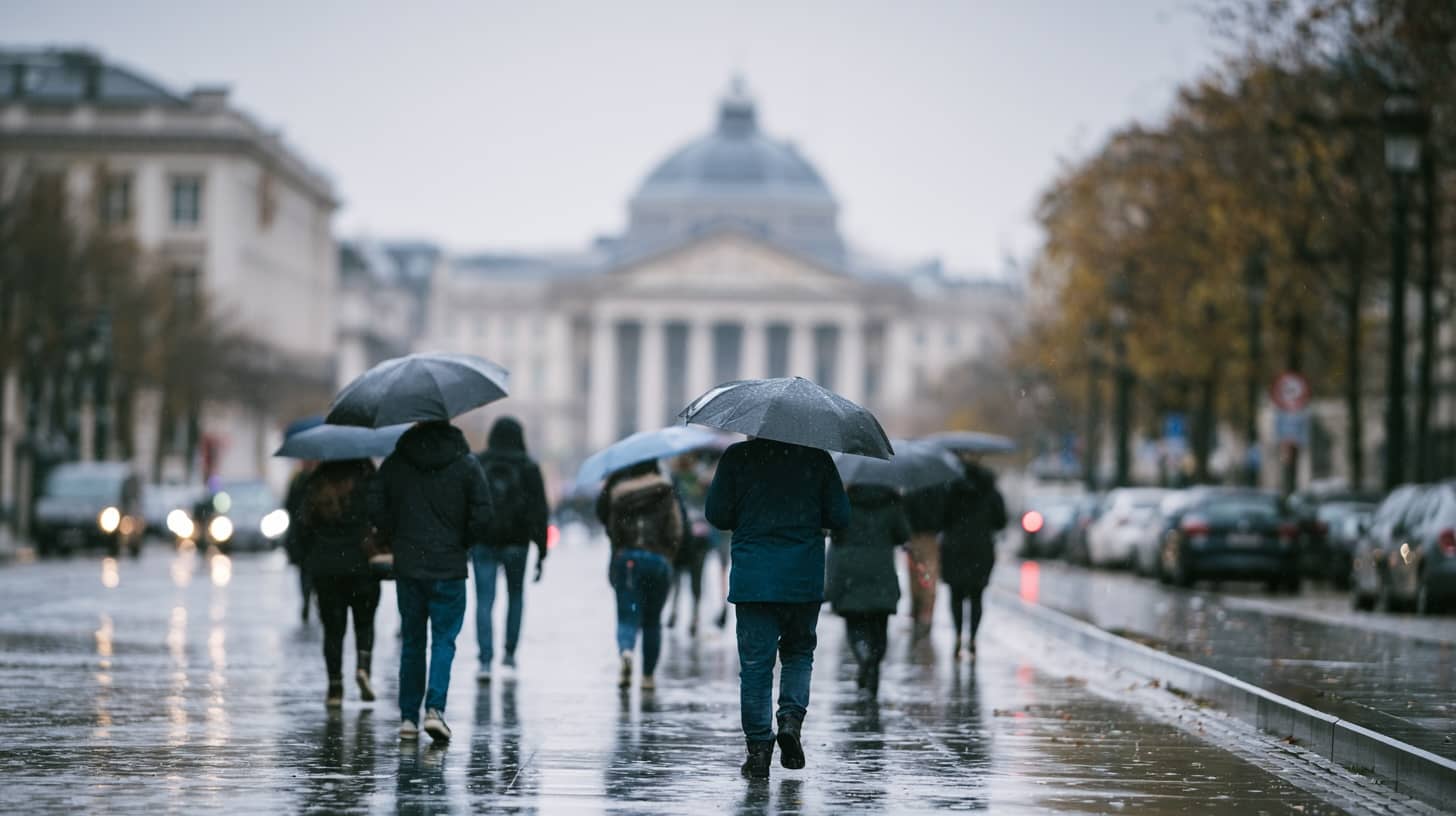
A layover in Brussels can vanish fast if you improvise badly. One minute you are optimistic about a tram ride and a café stop; the next, the rain has settled in, the pavements have turned silver, and the notion of “just walking around” starts to feel faintly absurd.
That is the cue to go indoors on purpose. I like Brussels best when it is treated as a city of rooms: galleries, atriums, café corners, covered passages, and museum cafés where wet coats steam gently under the radiator.
The good news is that the city makes this easy. Keep the route compact, move between major museums without much fuss, pause for lunch without losing momentum, and you can still come away with a clear sense of Brussels rather than a damp shuffle between taxi stands.
Start with a sensible arrival plan
If your layover is only a few hours, resist the temptation to head too far from the centre. The Royal Quarter, Mont des Arts, and the museum-heavy streets around Place Royale give you plenty to work with, and they are straightforward to reach by public transport or taxi.
For anyone coming in through Brussels Airport, the simplest move is often to travel light and keep your coat accessible. The city’s weather has a habit of changing its mind several times a day, and nobody looks elegant wrestling a suitcase across wet paving stones.
If you want a practical reference point, the official Visit Brussels site and the local transit authority STIB-MIVB are both useful before you leave the terminal. I would also check the official pages for whichever museum matters most to you, simply because Brussels has a habit of making last-minute closures feel like a personal insult.
Begin at Mont des Arts, not at random
Mont des Arts is the cleanest starting point for a rainy museum day. It is one of those places that looks made for a city-guide photograph, but it is also genuinely useful: central, walkable, and surrounded by enough institutions to keep you dry for hours.
From here, the city’s museum logic becomes obvious. You are close to the Royal Museums of Fine Arts of Belgium, the Magritte Museum, the BELvue Museum, and the Musical Instruments Museum, which gives you a satisfying amount of choice without forcing a cross-city odyssey in bad weather.
I like to begin with the surrounding architecture before going inside. The square itself gives you a broad view over the lower city, and when the rain is steady, the sight of people moving between stone terraces and museum entrances feels like Brussels in one of its most competent moods.
Choose your first museum with intention
If you want grand old-master energy, the Royal Museums of Fine Arts are the obvious starting point. The collection gives you scale, seriousness, and enough room to settle into the day properly, which matters more than people admit on a layover.

If you prefer something tighter and more concentrated, head straight to the Magritte Museum. Brussels has a complicated relationship with surrealism, but Magritte gives the city a useful shorthand: wit, precision, and a slight refusal to behave predictably.
The Royal Museums of Fine Arts of Belgium and the Magritte Museum are both worth checking directly for current access and ticketing details. If you are short on time, choose one rather than trying to absorb both in a rush; museum fatigue is real, and Brussels does not reward frantic pacing.
Let the museums do different jobs
A good rainy route works best when each stop has a distinct mood. One museum should feel generous and spacious, another compact and clever, and a third more like a palate cleanser than a thesis statement.
That is where the Musical Instruments Museum earns its place. Housed in the Old England building, it is a pleasure even before you start looking at the collection. The exterior alone gives you a lesson in Brussels architecture: ornate, confident, and perfectly happy to show what it is, much like the city’s small plates and wine bars later in the day.
Inside, the museum is ideal for slow browsing. You can move at your own pace, take in the building, and still have enough energy left for the rest of the afternoon. The official Musical Instruments Museum website is the best place to confirm access details.
Use the city’s architecture as part of the route
One advantage of a museum day in Brussels is that the walk between institutions is never wasted. Even in rain, the blocks around Place Royale, Rue de la Régence, and the edges of the Royal Quarter give you façades worth noticing.
The city’s style is a little more layered than people expect. There is neoclassical solemnity, Art Nouveau flair, administrative dignity, and the occasional building that seems to be holding several centuries together with decent manners and not much else.
When the weather is poor, I prefer to treat these streets as open-air galleries in their own right. You do not need to linger in the drizzle, but a few minutes outside between museums makes the day feel connected rather than stitched together by tickets and umbrellas.
Stop for lunch before your mood drops
Rainy layovers often fail for one simple reason: people forget to eat properly. A museum route without lunch turns from elegant to merely dutiful, and no one wants to reach the afternoon galleries cross and under-caffeinated.
For a measured break, stay in the same part of town and avoid overcomplicating things. If you want ideas for where to eat without wandering too far, our own Where to eat in Brussels guide is a useful companion, especially if you are trying to keep the day compact.
On a wet day, I tend to prefer something unfussy: soup, tartine, a plate of something warm, and coffee that arrives quickly. Brussels has plenty of places that understand lunch as a practical service rather than a lifestyle event, which I consider a virtue.
Make time for one café that feels like a pause
After two museums, I want a café that acts as a reset, not a performance. Brussels can do polished coffee rooms, but it also does good plain café culture: brass, wood, newspapers, and the satisfying sense that nobody expects you to become more interesting than you already are.
Near the museum quarter, you are never far from somewhere that will let you sit out a downpour with a pastry and a strong espresso. I like this kind of interlude because it keeps the day from becoming museum-hopping in the literal, sweaty sense.
If you prefer a slightly longer detour, the area around Ixelles offers a very decent rainy-day extension. Our blog on a rainy day in Brussels covers that part of town well, especially if your layover stretches into evening and you want to trade galleries for cafés and dinner.
Don’t skip the design-adjacent stops
Brussels is especially satisfying when you mix formal museums with spaces that blur into design, politics, and civic history. The BELvue Museum is a useful example: less about pure spectacle, more about helping you read the country you are standing in.
That matters in a place as layered as this one. A rainy layover is not the moment to solve Belgium, of course, but it is an excellent time to gain a more grounded impression of the city beyond waffles and a quick pass through the Grand Place and administrative shorthand.
If you like objects as much as paintings, the city has plenty to offer. The Musical Instruments Museum, the Art Nouveau façades nearby, and the clean geometry of Mont des Arts give the day a satisfying visual rhythm. You leave with more than one type of memory, which is always the point.
A practical route for three to five hours
For a short layover, keep the route brutally simple. Start at Mont des Arts, visit one major museum, break for lunch, then add a second smaller stop or a café before heading back toward your train, tram, or airport transfer.
If you have closer to five hours, you can afford a little breathing room. That is usually enough for one full museum, one partial museum, a proper lunch, and a slow walk through the Place Royale area without the uneasy feeling that you are racing the clock.
- Choose one anchor museum, not three.
- Check official websites for closures, timed entry, and special exhibitions.
- Carry a compact umbrella, but rely on indoor routes rather than heroic walks.
- Keep cashless payment and transit apps ready before leaving the airport or station.
- Leave buffer time for the return journey; Brussels traffic can be politely uncooperative.
Where to end if the rain keeps going
If the weather refuses to improve, finish near the centre rather than pushing outward. The beauty of a Brussels museum day is that you can end almost anywhere between Place Royale and the Grand Place radius without needing to recalculate the city from scratch.
For a final indoor stop, the Galerie de la Reine is an easy choice. It is not a museum, but it behaves like part of the same weatherproof system: covered, elegant, and useful when you want one last coffee, a chocolate shop, or a calm walk under glass.

If you have a little extra energy, Grand Place is worth the detour even in bad weather, though I would keep expectations modest. Rain tends to flatten spectacle a bit, but it also sharpens the contrast between the square’s formality and the looser, more human scale of the streets leading back toward the museum quarter.
What I would actually prioritize
For me, the best rainy layover in Brussels is not about seeing the largest number of things. It is about choosing a route that keeps the city legible: one strong museum, one second stop with a different tone, one proper lunch, and one café where you can sit without feeling watched by the clock.
If I had to reduce the whole day to its essentials, I would start with the Royal Museums of Fine Arts or the Magritte Museum, add the Musical Instruments Museum if time allows, and keep Mont des Arts as the navigational centre. That gives you art, architecture, and enough room to enjoy the city rather than merely pass through it.
Rain has a way of exposing bad planning, but it also rewards a city that knows how to stay indoors gracefully. Brussels does that better than many places, and for a layover, that is a very good quality to have.