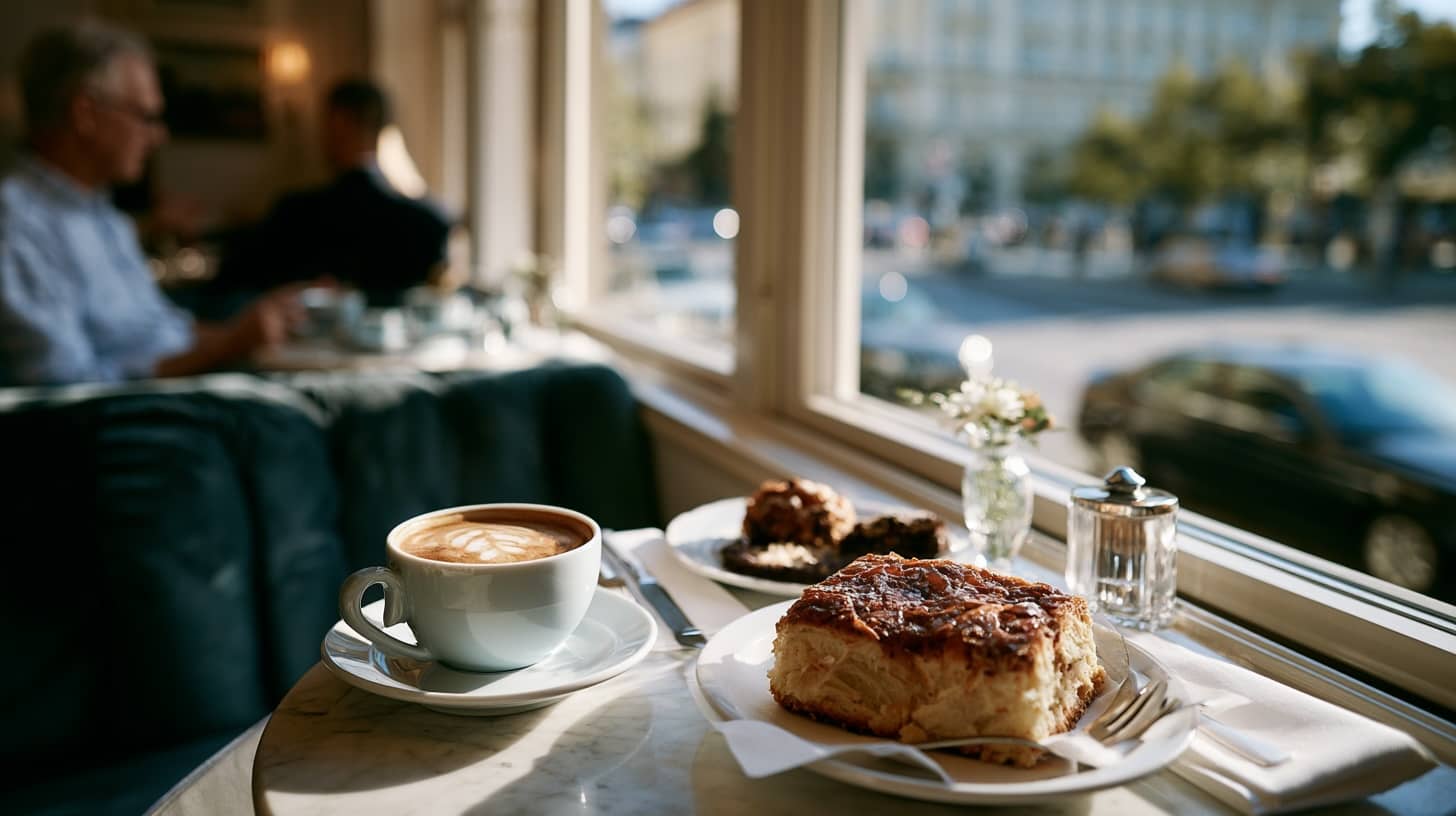
The first good decision in Prague is often to get up earlier than you planned. By 8 a.m., the city’s café rooms are already doing the sort of quiet, precise work that makes a day feel better organised: bread is still warm, espresso is sharp, and the tables near the windows have not yet been claimed by late-risers who prefer to treat breakfast as a late-morning event.
I find that the café scene here is at its most persuasive before the city fully resets into sightseeing mode. There is less performance, more rhythm. You notice waiters refilling glasses without being asked, regulars reading newspapers as if time still belongs to them, and the pleasing contrast between Prague’s heavy architecture and a cup of coffee that arrives with no fuss at all.
Why early mornings suit Prague so well
Prague is a city of handsome facades and deliberate pauses, but cafés are where that formality loosens. Early in the day, the atmosphere is not rushed, exactly, but properly awake. It is the best hour to watch tram lines beginning to fill, museum doors opening nearby, and the first walkers cutting through streets before tour groups arrive in earnest.
The practical advantage is obvious: tables are easier to find, the coffee is fresher, and breakfast menus tend to feel more focused before the lunch crowd takes over. The less obvious advantage is that the city’s café culture makes more sense in the morning, when it still feels like a local habit rather than a tourist activity.

If you want one useful piece of planning advice, keep your first coffee close to where you are staying. Another way to think about Prague is to choose a base that lets you step out early, walk ten minutes, and still be back near your room before the day starts asking for decisions. For central neighbourhoods and hotel placement, that approach to staying central can make the whole morning feel more generous.
Start with a proper coffee room, not a rushed takeaway
Prague does takeaway coffee quite well now, but that is not the point of the city’s best morning hours. The more satisfying ritual is to sit down somewhere with a little history, a little polish, and no need to order in a hurry. Café Louvre, on Národní třída, remains one of the classic choices for exactly that reason: wide rooms, old-school confidence, and the pleasant sense that nobody expects you to leave too quickly.
Another very workable early stop is Café Savoy in Malá Strana, where the morning pace is suitably elegant and the pastry case does not try too hard. It is the sort of room that makes coffee feel like part of breakfast rather than a separate task. If you are the sort of traveller who likes a place with a bit of theatre but not too much noise, this is a strong first move.
For a quieter, more contemporary start, Můj šálek kávy in Karlín is a reliable name. It leans more modern than grand, but it understands the difference between a cup you drink and a cup you remember. In a city with so many historic interiors, it is useful to have at least one café that is crisp, current, and not trying to cosplay the past.
Old coffeehouses and modern espresso bars can coexist
What I like about Prague is that it does not force you to choose between old and new. You can begin the morning under painted ceilings and mirrored walls, then have a second coffee somewhere pared back and minimal, with beans roasted to taste like they were meant to be noticed. That range gives the city’s café scene a rare kind of balance.

EMA Espresso Bar, near Masarykovo nádraží, is one of those places that makes the argument for modern coffee without becoming smug about it. The room is clean-lined and efficient, and the coffee is the point. It suits travellers who want something precise before moving on to museums, meetings, or a long walk across the river.
At the other end of the temperament scale, the Slavia café opposite the National Theatre still offers the sort of view that encourages lingering. It is a place for coffee with a side of civic drama, especially if you enjoy watching the Vltava and the bridges while the day gathers pace. I would not go for speed; I would go for atmosphere and the view of a city arranging itself.
Where to go before the breakfast crowd settles in
If your idea of a good morning includes eggs, pastries, and a table that does not wobble, Prague has plenty of options, but timing matters. Arriving early means you get the cleaner lines, better service, and the sense that a room is still deciding what sort of day it wants to have. Arriving late means queues and compromises, which is nobody’s favourite breakfast philosophy.
In the centre, Cafefin offers a polished but relaxed breakfast stop, while Eska in Karlín is better suited to travellers who like a more modern, produce-led approach. Eska can feel slightly more architectural than cosy, which suits Prague rather well: the city often prefers good design to cuteness, and breakfast is no exception.
If you are near Wenceslas Square, stop into a dependable bakery-café rather than overthinking it. Prague’s simplest morning pleasures are often the most effective: a roll with butter, a good slice of cake, or a decent omelette eaten before the city begins its louder business. There is virtue in not making breakfast into a project.
The neighbourhoods that make café hopping easy
For café walkers, Prague works best when you think in neighbourhoods rather than in an abstract city centre. Josefov and the Old Town give you the handsome, slightly ceremonial version of the morning, with streets that feel immediately recognisable and cafés that cater to both early travellers and local routines. This is where a short walk can produce a good room every few minutes.
Across the river, Malá Strana is slower and gentler at breakfast, especially if you begin near the edge of the district before the day’s foot traffic thickens. I like how the streets there tilt between residential calm and postcard neatness, which makes an early coffee feel almost private. It is also a good starting point if you plan to move on toward Charles Bridge before the crowds fully assemble.

Karlín is the neighbourhood for people who like their cafés with a current address and a practical surrounding. It is easy to move from coffee to a bakery to a clean, modern lunch spot without feeling as though you have wandered into a themed district. Vinohrady, meanwhile, gives you a more residential, lived-in café rhythm, with a steadier local pace and enough decent options to reward an unhurried morning.
Pair coffee with something worth walking to
A good Prague morning is rarely just about coffee. It is about pairing coffee with a short, useful detour, ideally one that feels more architectural than exhausting. From Café Savoy, it is natural to wander toward Kampa or across to the river. From Café Louvre, you can drift toward the National Theatre or continue along Národní with the day still on your side.
Near the Old Town, a coffee stop works neatly before a museum visit. The National Gallery’s official site is worth checking if you plan to build the morning around art, and the best way to enjoy that sort of plan is to arrive fed, caffeinated, and not yet impatient. Prague’s museums and galleries are easier to appreciate when you are not hunting for breakfast at the same time.
I also like the idea of walking from coffee into a park or viewpoint rather than straight into more indoor time. Let the day breathe a little. A café breakfast followed by Petřín, Letná, or a slow river crossing gives Prague its best proportions: not too fast, not too scripted, and just elegant enough to feel like you made a sound judgment.
What to order, and what to ignore
In the morning, I would keep the order simple and local. A cappuccino is rarely a bad answer, but Prague’s espresso bars also tend to handle black coffee well, which is useful if you are planning to be active rather than settled for the next hour. Czech pastries are worth attention too, especially when they are still fresh and not merely decorative.
Ignore the urge to order too much. A good breakfast in Prague often needs less than you think: coffee, something baked, maybe eggs, and that is enough to support several hours of walking. Heavy brunch plates can make the rest of the day feel oddly overburdened, and this city is at its best when you leave room for more than one stop.
- Go early if you want a quieter room and better table choice.
- Choose one old café and one modern espresso bar if you have time for two stops.
- Bring cash or a card, but do not assume every place has the same payment habits.
- Ask for the breakfast menu before ordering from the general lunch board.
- Use cafés as anchors for a walk, not as a reason to stay indoors all day.
Indoor weather days are where cafés become essential
Prague can be beautifully walkable and still entirely capable of sending you indoors for half a day. On cold, rainy, or grey mornings, the café scene becomes less of a pleasure and more of a planning tool. That is when it matters most to know where you can sit comfortably without treating shelter as a compromise.
For weather-proof travel, the old coffeehouses are especially useful because they give you scale and warmth without any frantic energy. If you are trying to decide whether to head to a museum or wait out the drizzle, this is where a place like Café Louvre earns its reputation. The room can absorb an indecisive morning and make it look deliberate.
Even the newer places work well in poor weather, because they are efficient without feeling sterile. Prague’s café culture is not just about style; it is about keeping the day moving with enough grace that a change in weather does not wreck the plan. That, to me, is the real luxury.
A sensible morning route for first-timers
If I were shaping one clean café morning for a first-time visitor, I would keep it simple. Start in the centre, choose one proper breakfast room, and then walk toward either the river or a museum before lunch. The city is compact enough to make this easy, and the best early cafés are well placed for exactly that sort of route.
One version could begin at Café Louvre, continue past the National Theatre, and end with a slow crossing toward the Old Town or Kampa. Another could start in Karlín at Můj šálek kávy or Eska, then move toward the centre by tram or on foot. Both plans give you coffee, architecture, and enough movement to justify a second espresso if you want one.
If you prefer to keep things even slower, stay in one district and let breakfast turn into late-morning wandering. Prague does not require you to race between famous places. It prefers a measured day, a decent table, and the sort of early start that makes the rest of the city feel like it is meeting you halfway.
Why the early hours are the best hours
The café scene here is strongest when it still belongs partly to local routines. By late morning, you will see more visitors, more cameras, and more people trying to fit too much into one day. Earlier than that, the city feels more legible: coffee is treated seriously, breakfast is not yet a performance, and the streets outside still have room to breathe.
That is why I would argue for an early start without sounding like an over-disciplined guidebook. It simply gives you more of what Prague does well. A good room, a clean cup, a short walk, and a city that has not yet decided to hurry is a very fine way to begin.
So, yes: get up earlier than the average traveller. Not for efficiency’s sake, but because Prague’s cafés are at their best when the day is still taking shape. That is when the coffee tastes sharper, the rooms feel calmer, and the city offers you just enough time to enjoy it properly.