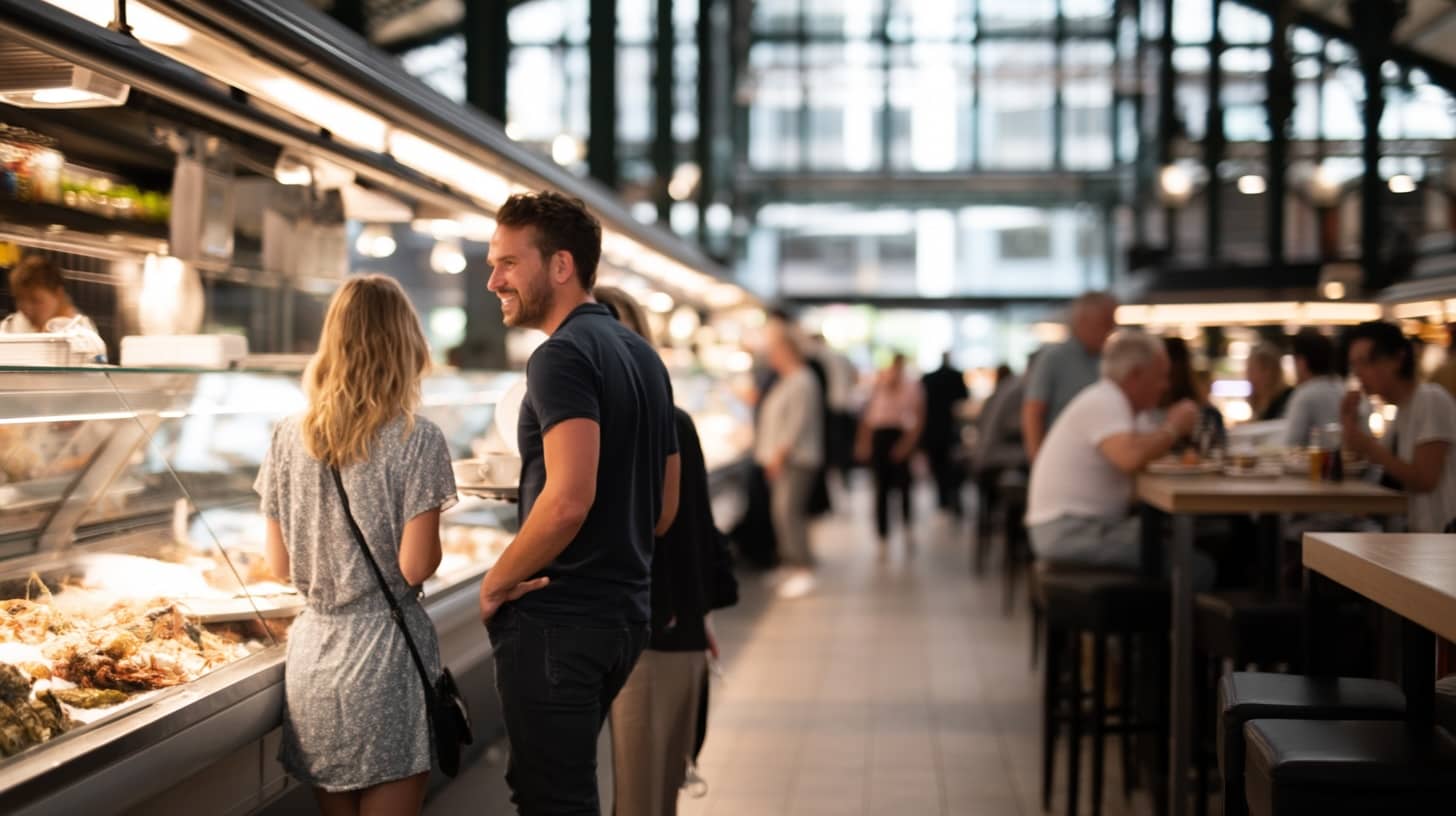
One mistake I see travelers make in Brussels is trying to “do lunch” in a single place. That works if you want a table and a long, settled meal, but the city is better approached in stages. A market hall gives you choices, cover from the weather, and enough movement to keep the afternoon from collapsing into a food coma.
The trick is straightforward: pick one hall for oysters or a proper plate, another for coffee or something sweet, and a third for the snack you did not set out to eat but will absolutely order anyway. Brussels handles this kind of low-drama ambition well. You can keep the whole route on foot, or hop on a tram when your appetite starts renegotiating the terms.
Start with Sainte-Catherine, where lunch already feels like a plan
I’d begin around Place Sainte-Catherine, because it gives you the easiest starting point and the most satisfying first decision of the day. The area has long been one of Brussels’ most dependable food addresses, and even when you are not aiming for a formal market hall, the tempo is familiar: counters, quick bites, lunch-break regulars, and enough movement to keep your attention.

If you like seafood, this is where Brussels speaks most clearly. The old fish-market atmosphere still lingers around the square, and the nearby restaurants lean into it with oysters, shrimp croquettes, and plates that seem made for people who know they are staying out longer than intended, much like the lingering pace of a museum-filled afternoon. I’m always wary of a place that needs to explain itself; Sainte-Catherine usually doesn’t.
It also helps that the neighborhood is easy to walk in the way hungry people need. You can come from the Grand-Place area, pass through streets lined with cafés and specialty shops, and settle into lunch without feeling as though you’ve crossed half the city. If you want a reference point before you set off, the official visit.brussels site is the sensible place to check what’s happening nearby.
Mercado Matinal: the morning market with lunch energy
From Sainte-Catherine, I’d head toward the food-driven part of the route at the Marché Matinal, the city’s wholesale market at the Abattoir site in Anderlecht. It is very much a working market rather than a polished lunch destination, which is exactly why it matters. If you arrive on the right morning, the energy is brisk, practical, and a little thrilling in the way good city logistics can be.
You are not coming here for choreography. You come for produce piled high, cheese, spices, seafood, and the sort of wholesale scale that makes regular supermarket shopping feel faintly theatrical. For an independent traveler, that matters: it gives you a sense of how Brussels eats when nobody is posing for a photograph.
The area around the Abattoir is also part of what keeps Brussels from turning its food scene into a neat postcard. It is busy without being showy, and it sits at the intersection of everyday trade and weekend browsing. If your timing is right, you can drift from market activity into a proper lunch elsewhere without ever needing to choose between “local” and “comfortable.”
Marché des Tanneurs for the midday reset
After the faster pace of a wholesale market, I like the more measured atmosphere of Marché des Tanneurs. It is one of those places that makes practical sense immediately: produce, ready-to-eat counters, specialty stands, and enough variety to solve lunch for a mixed group without argument. That alone earns it a place on any Brussels food walk.

What I like most is the sense that people here know exactly what they are doing. You see shoppers who came for groceries, workers grabbing something efficient, and visitors trying to figure out what to eat without making a theatrical production of it. The hall rewards that mood. It is easy to assemble a lunch that feels both casual and considered.
There is also a useful rhythm to a hall like this. You can start with something savory, pause for coffee, then pick up fruit, bread, or cheese for later. If you are staying in the city for more than one day, this is where you can quietly improve your hotel minibar situation without paying Brussels restaurant prices for every single bite.
Lunch at Les Halles Saint-Géry, then a walk to cool your enthusiasm
Les Halles Saint-Géry is the obvious stop for anyone who likes their food with a side of architecture and city life, much like the mood in Ixelles on a rainy evening. The building itself gives the route some gravitas, but it never feels stiff. It’s the kind of place where you can have a drink, eat something straightforward, and watch the neighborhood move around you without the room feeling rushed.
For lunch, I’d treat it as a flexible stop rather than a grand commitment. Think soups, plates, sandwiches, a glass of something cold, and maybe a second coffee if you are sensible, or a dessert if you are not. The point is to keep the route light enough that you can still enjoy the rest of the afternoon instead of spending it in a strategic chair recovery operation.

From here, the nicest move is to walk it off through the surrounding streets rather than doubling back by habit. Brussels is particularly good at the in-between bits: shopfronts, side streets, old facades, and small shifts in atmosphere every few blocks. The official city transport site, STIB-MIVB, is useful if you decide the next leg should be by tram rather than by heroic digestion.
The covered halls that make bad weather irrelevant
One of the best things about Brussels market halls is that they make a rainy day feel as though you had planned it that way. That matters more than it sounds. A covered hall gives you a place to sit, eat, and regroup without the mood swing that comes with wet sidewalks and wind that seems personally insulting.
It also changes the way you spend money. In a hall, you can make lunch feel generous without going full white-tablecloth. Share a plate, split a dessert, and try something you would not necessarily order if you were alone at a formal restaurant table trying to look decisive. Brussels is at its best when it permits a little indecision.
If the weather turns, I would stay inside the route and simply lengthen the meal. Order another coffee, ask what looks best today, and give yourself permission to linger. The city’s market halls are not just about buying food; they are about giving lunch a place to happen without fuss.
What to eat along the route
If I were mapping a sensible food strategy through Brussels’ market halls, I would keep it focused rather than greedy. The city has enough rich and salty things to flatten you by 2 p.m. if you are not careful, and there is no prize for sampling with reckless optimism. Pick a lane, then maybe two.
- Seafood: oysters, shrimp croquettes, smoked fish, or a simple plate with bread and butter.
- Cheese and charcuterie: ideal if you want to eat slowly and keep walking.
- Hot lunch counters: soups, tartines, grilled dishes, or a daily plate.
- Pastry and sweets: useful for the halfway point when lunch needs a final flourish.
- Coffee: not optional if you are trying to keep the route elegant rather than sleepy.
I’d also make room for one thing you do not “need.” Brussels rewards a slightly indulgent second stop: a pastry after seafood, a beer with lunch, or a slice of something sweet that was not part of the original plan. That is not weakness. That is good route design.
How to pace the route without overthinking it
The smartest version of this lunch route is not the fastest one. Start before you are fully starving, which means you will make better choices and not overorder at the first promising counter. That sounds obvious until you are standing in front of a cheese display behaving like a person who has never seen lunch before.
I’d keep the route to two or three halls, depending on how much you enjoy walking between stops. Brussels is easy enough to navigate on foot in the center, but it is also a city where a tram can save your mood, especially if the weather changes or your appetite becomes uncooperative. That flexibility is part of the pleasure.
If you want a broader feel for the city between stops, detour through the central streets rather than staying on the most direct line. You will catch the texture that makes Brussels interesting: old stone, modern retail, people eating at standing counters, and the occasional calm square like Grand Place in daylight where lunch can settle before the next move.
Where to pause for coffee, beer, or a late sweet
No proper lunch route should end the moment the plates are cleared. In Brussels, that would feel ungracious. The city does not demand a dramatic finale, but it does ask you to leave room for a pause after the meal, especially if you have been moving between market halls and need a softer landing.
Coffee is the obvious choice, and fortunately the city takes it seriously enough that you can usually find a good cup near the food routes without wandering into a chain-café trap. If you prefer beer, this is also where Brussels quietly reminds you that lunch can become a very civilized afternoon if you let it, and the thought carries easily into a wine-bar evening. One drink is plenty; the city does not need you to behave like a festival.
For dessert, go with whatever looks least fussy and most freshly made. A tart, a waffle, a pastry, a simple slice of something cream-filled—Brussels is generous about sweets, and the market-hall environment makes them feel like part of the day rather than an extra performance. That is a useful distinction for adults with trains to catch later.
Best neighborhoods to pair with the route
The lunch route works best when paired with neighborhoods that are easy to drift through afterward. Sainte-Catherine and the center are the most obvious choices, but I would also keep an eye on the nearby streets around Dansaert if you like design shops, relaxed cafés, and a slightly more polished urban mood. It is the sort of area where a late lunch can turn into a cocktail without anyone needing to announce a transition.
For a more practical extension, the area around the South Market and the city’s transport links works well if you are coming from elsewhere in Brussels or planning to continue the day across town. The point is not to stitch together a heroic itinerary. It is to make food the center of gravity and let the city organize itself around that.
If you are still deciding how much time to leave for the rest of the day, I’d build in a buffer. Market-hall lunches tend to expand in interesting ways. A quick bite becomes a second stop, then a coffee, then one more thing because someone nearby recommended it and you are not made of stone.
A practical version I’d actually recommend
Here is the version I’d send a friend who likes good food but does not want a complicated afternoon. Start near Sainte-Catherine for seafood or a first drink. Move to Marché des Tanneurs for produce, hot dishes, or whatever looks best in the moment. End at Les Halles Saint-Géry for coffee, dessert, or a last glass before walking back into the center.
That gives you variety without turning lunch into a scavenger hunt. It also captures one of Brussels’ nicest habits: letting food happen in spaces that still feel useful, social, and lived-in. Market halls here are not museum pieces. They are part of the everyday city, which is exactly why lunch tastes better in them.
And if you only manage one hall instead of three, that is fine too. Brussels is not asking for perfection. It is asking you to arrive hungry, choose well, and leave enough room for one more thing than you planned.